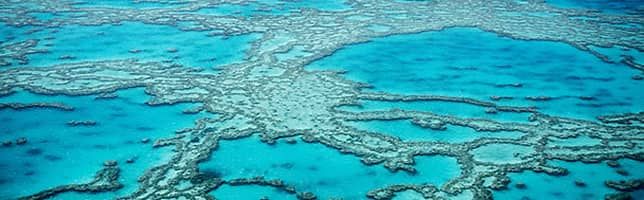
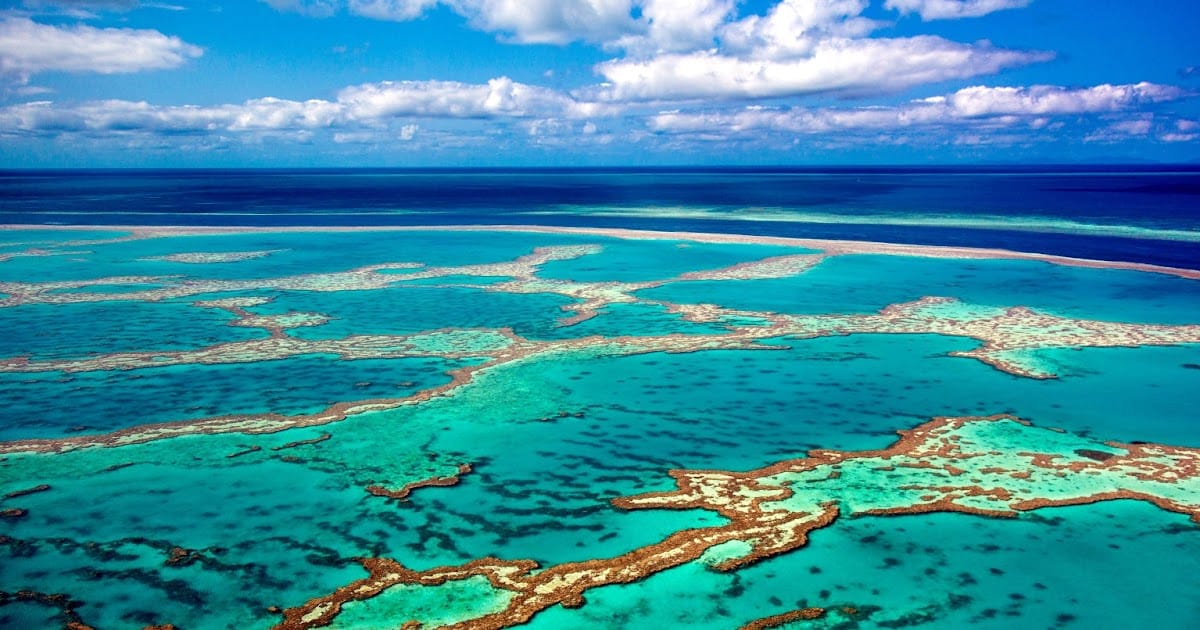
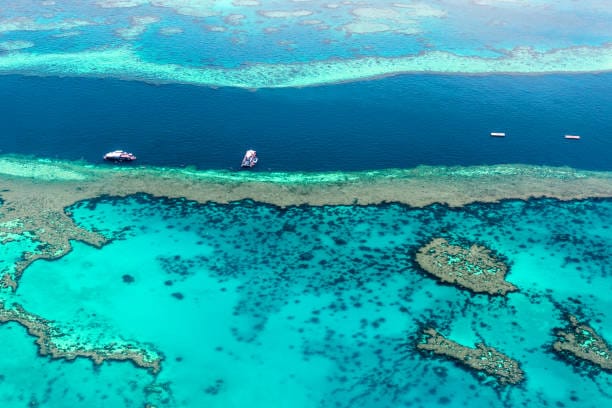
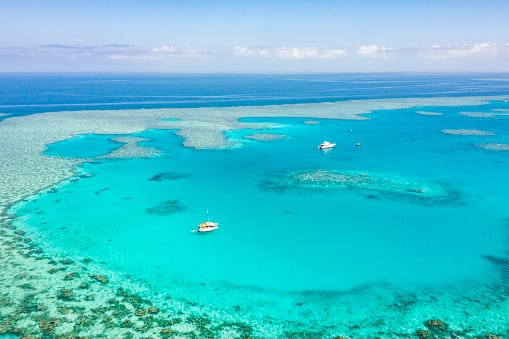
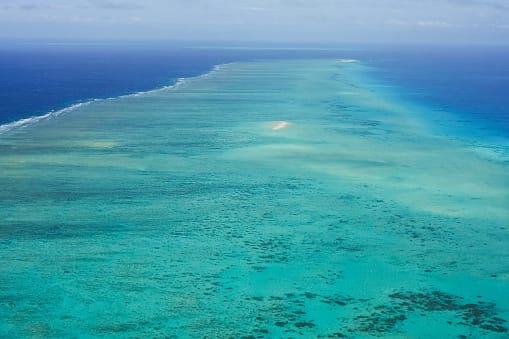
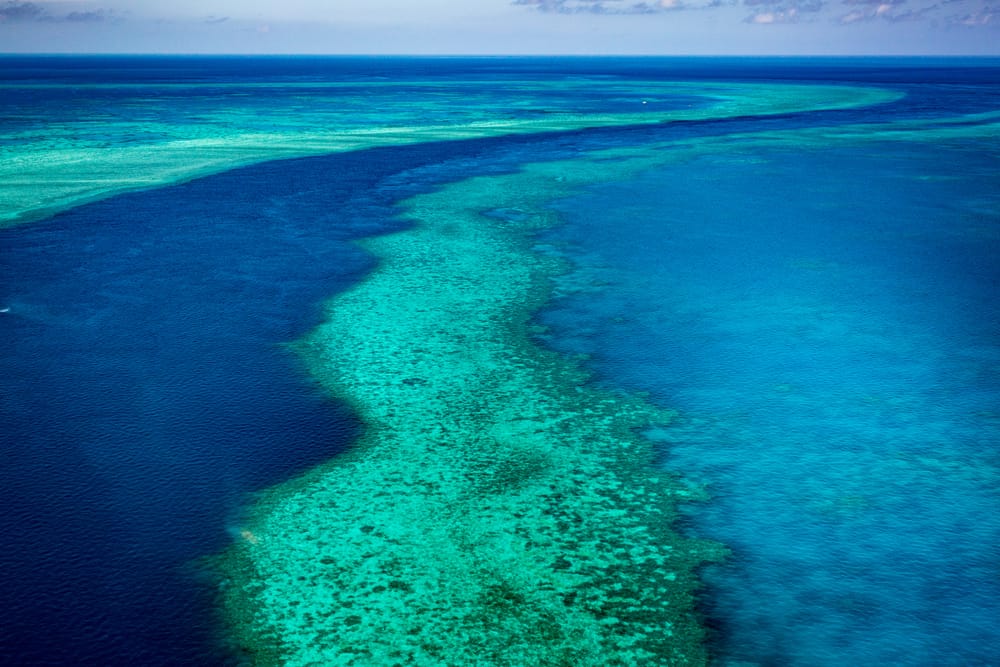
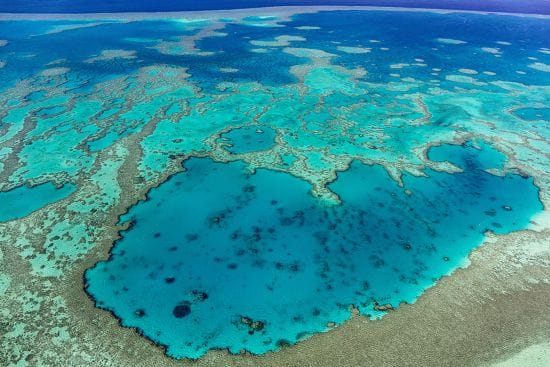
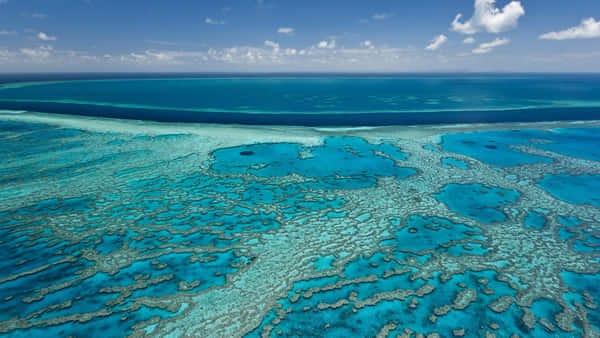
Great Barrier Reef from the air, Queensland, Australia
Off the northeastern coast of Australia, in the waters of the Coral Sea, the Great Barrier Reef stretches like one of the greatest natural wonders on the planet. It is made up of almost 3,000 reefs and hundreds of islands that run along the coast of Queensland. Together, they constitute the largest continuous coral system in the world, with a length of more than 2,300 kilometers.
Beneath the surface, an ecosystem of extraordinary richness develops. Hundreds of species of coral and more than 1,600 species of fish coexist with sea turtles, rays, birds and reef sharks. Shallow lagoons, coral cays, and outer reefs make up a complex network of interconnected habitats.
Recognized as a UNESCO World Heritage Site, the Great Barrier Reef has outstanding ecological value and maintains a deep link to the traditions of Australia's indigenous peoples. Currently, various scientific and community initiatives are working to protect this fragile ecosystem in the long term.
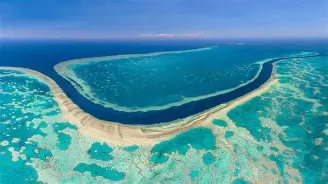
Gran Barrera de Coral desde el aire, Queensland, Australia
Frente a la costa noreste de Australia, en las aguas del mar del Coral, la Gran Barrera de Coral se extiende como uno de los mayores prodigios naturales del planeta. Está formada por casi 3.000 arrecifes y cientos de islas que recorren la costa de Queensland. En conjunto, constituyen el sistema coralino continuo más grande del mundo, con una longitud superior a los 2.300 kilómetros.
Bajo la superficie, se desarrolla un ecosistema de extraordinaria riqueza. Cientos de especies de coral y más de 1.600 especies de peces conviven con tortugas marinas, rayas, aves y tiburones de arrecife. Lagunas poco profundas, cayos coralinos y arrecifes exteriores conforman una compleja red de hábitats interconectados.
Reconocida como Patrimonio Mundial por la UNESCO, la Gran Barrera de Coral posee un valor ecológico excepcional y mantiene un profundo vínculo con las tradiciones de los pueblos indígenas de Australia. En la actualidad, diversas iniciativas científicas y comunitarias trabajan para proteger este frágil ecosistema a largo plazo.
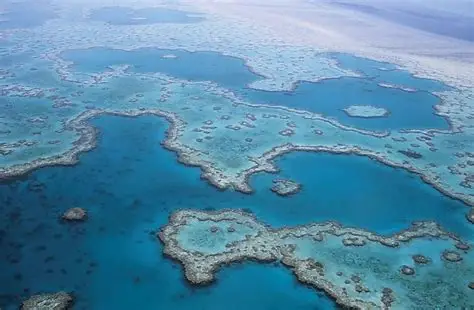
Grande Barriera Corallina dall'alto, Queensland, Australia
Sulla costa nord dell'Australia, nelle acque del Mar dei Coralli, la Grande Barriera Corallina è estesa come una delle meraviglie naturali del pianeta. È composta da quasi 3.000 barriere coralline e centinaia di isole che si estendono lungo la costa del Queensland. Insieme, costituiscono il più grande sistema corallino continuo al mondo, con una lunghezza superiore a 2.300 chilometri.
Sotto la superficie, si sta sviluppando un ecosistema di straordinaria ricchezza. Centinaia di specie di coralli e più di 1.600 specie di pesci convivono con tartarughe marine, razze, uccelli e squali di barriera. Lagune poco profonde, cay corallini e barriere coralline esterne costituiscono una complessa rete di habitat interconnessi.
Riconosciuta come sito patrimonio mondiale dell'UNESCO, la Grande Barriera Corallina rappresenta un valore ecologico eccezionale e mantiene una profonda storia con le tradizioni dei popoli indigeni australiani. Attualmente, varie iniziative scientifiche e comunitarie stanno lavorando per proteggere questo fragile ecosistema nel lungo termine.
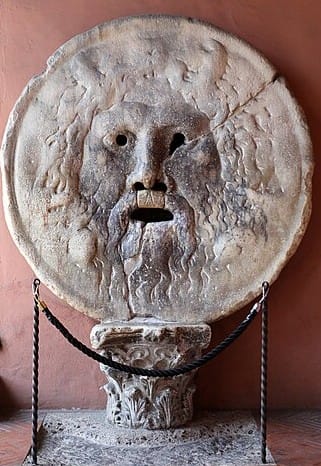
The Mouth of Truth is a reader-supported publication. To receive new posts and support my work, consider becoming a free or paid subscriber.
In questo spazio non si paga per entrare: si entra perché si riconosce un’eco,
un frammento di sé, un varco che merita di essere custodito.
Se desideri sostenere questo lavoro con un gesto libero, puoi farlo qui:

This space does not ask for payment to enter: you enter because you recognize an echo,
a fragment of yourself, a threshold worth preserving.
If you wish to support this work with a free and voluntary gesture, you may do so here:
En este espacio no se paga por entrar: se entra porque uno reconoce un eco,
un fragmento de sí mismo, un umbral que merece ser cuidado.
Si deseas apoyar este trabajo con un gesto libre y voluntario, puedes hacerlo aquí: