
The moral crisis of the Western world
Europe welcomes the Taliban and looks into a moral abyss
Review by Borja Martínez • 5 min read

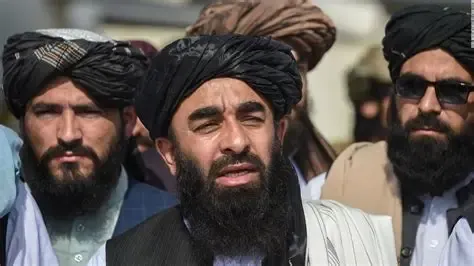
The man who entered through the revolving doors of the European External Action Service building on Tuesday morning wore an immaculate white robe and a carefully trimmed beard. His aides carried folders on official letterhead. A Belgian official was waiting for them in the lobby with the professional and slightly anxious smile that is reserved for visits that no one knows very well how to classify. It was June 2026, and envoys from the Islamic Emirate of Afghanistan were coming to talk, among other things, about regional stability.
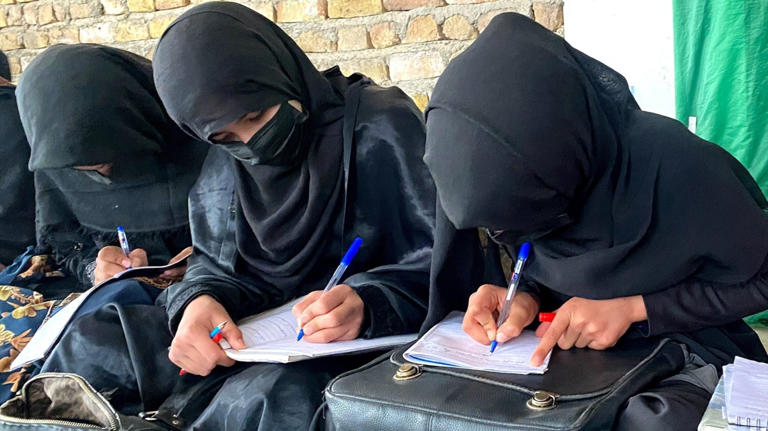
At the same time, a thirteen-year-old girl named Farida folded the same math sheets for the fourth time and put them between the seams of the cloth bag with which her mother sent her to buy lentils. She had learned it by heart: not to walk with others, not to arrive at the same time as the others, not to carry anything that looks like a book. The class lasts forty minutes. If there is a knock on the door, the notebook disappears under the bundle of cloth and the teacher calmly opens it, because panic can be smelled.
Between these two scenes, separated by six thousand kilometers and a moral abyss, the story that no one in Brussels wants to name exactly.
Since the Taliban recaptured Kabul in August 2021, the architecture of the most systematic gender apartheid of the twenty-first century has been built with a coherence that is, in its own internal logic, almost admirable. First the universities, then the institutes, then the primary schools from the sixth grade. Then the parks, the hairdressers, the gyms, the public baths. Then the ban on working in international NGOs. Then that of working at the UN. Each decree was announced by the same previous silence and followed by the same expression of calculated surprise from the international community, which took two weeks to draft a communiqué and six months to forget it.
What is happening in Afghanistan is not an authoritarian drift, nor a humanitarian crisis in the technical sense of the term. It is the legal and planned extinction of half of a population of forty million people. Afghan girls born after 2009 have not known a single year of adolescence in which the state has not forbidden them something fundamental. For them, the question is not what career they will study, but whether they will ever be able to walk alone on a street.
And yet, in June 2026, the European Union receives its representatives to explore "channels of dialogue". Brussels' argument is predictable because it is always the same: without dialogue, Afghanistan becomes a failed state that exports terrorism and migratory flows. It is necessary to maintain contact. It is necessary, above all, to be pragmatic.
What is being negotiated in the air-conditioned rooms of Rond-Point Schuman is not, in reality, the situation of Afghan women. It's the price of ignoring it
The problem with pragmatism is that it has a short memory and a long price. Every time the West has extended a hand to the Taliban regime without non-negotiable conditions, the Taliban have responded with a new restrictive decree, with the learned certainty that fear of instability will always outweigh moral indignation. In 2022, they promised to ease educational restrictions in exchange for humanitarian aid. In 2023 they tightened the ban on universities. In 2024, primary schools for girls over eleven years of age closed. Every Western concession has been answered with a squeeze, because the regime knows that Brussels' patience is inversely proportional to its memory.
What is being negotiated in the air-conditioned rooms of Rond-Point Schuman is not, in reality, the situation of Afghan women. It is the price of ignoring it. A price that is paid in terms of consular access, conditional aid, border control agreements. Afghan women are not at the table. They are the issue that is postponed to a later round, when conditions are more favorable, when the regime has "evolved," when the political timing is right. The right political moment has not arrived for five years.
Meanwhile, in the mud-brick neighborhoods on the outskirts of Kabul, Herat, Jalalabad, hundreds of women hold with their own hands the only institution that the state has not been able to completely destroy: the will to know. Clandestine schools have no name or fixed address. They move from house to house every few weeks. Teachers communicate through apps with self-destruct messages and format their phones as regularly as others change passwords. Girls learn to arrive ten minutes apart, to hide notebooks between the folds of the burqa, to replace history textbooks with copies of the Koran if there is a knock on the door.
The resistance of women who teach in windowless rooms shows that the desire to learn survives any decree
It is a logistics of resistance that has something prodigious and a lot of unsustainable. Teachers who are discovered do not go to trial because there is no trial to go to. There is detention, there is interrogation, there is what the regime calls "orientation", which is a word that in religious police centres means things that Amnesty International reports describe with the coldness necessary to be published. The fathers and brothers of the women involved are also arrested, as accomplices, as proof that family control is the responsibility of the man. The owners of the properties lose their assets. The punishment radiates outward like a shockwave, designed so that no one who knows about a case wants to risk being next.
And yet, the classes continue.
Farida, thirteen years old and her pages folded between the lentils, does not know the name of any European diplomat. He does not know that six thousand kilometers away some men in ties are sitting in front of the men who signed the decrees that prevent him from going to school, discussing regional stability. What he knows is that his teacher has been teaching him algebra in a windowless room for three years, and that this is, in the coordinates of his world, an act of courage that has no equivalent in any known diplomatic vocabulary.
The question that Brussels is not asking itself out loud is simple: what message does the fact that a regime that has turned half of its population into domestic prisoners receive official delegations from the world's leading regulatory power send to the world? The answer is also simple, if uncomfortable: that if you hold out long enough, if you hold your own people hostage to your political survival, the West will end up blinking, adjusting its tie, and offering you a seat at the table.
The resistance of women who teach in windowless rooms shows that the desire to learn survives any decree. The question is whether the international community will live up to that courage, or whether it will prefer to continue calling "dialogue" what, seen from Kabul, has the unmistakable appearance of a surrender.
Europa recibe a los talibanes y se asoma a un abismo moral
Opinión de Borja Martínez • 5 minutos de lectura
El hombre que entró por las puertas giratorias del edificio del Servicio Europeo de Acción Exterior la mañana del martes llevaba una túnica blanca inmaculada y una barba recortada con esmero. Sus ayudantes cargaban carpetas con membrete oficial. Un funcionario belga los esperaba en el vestíbulo con la sonrisa profesional y levemente ansiosa que se reserva para visitas que nadie sabe muy bien cómo clasificar. Era junio de 2026, y los enviados del Emirato Islámico de Afganistán venían a hablar, entre otras cosas, de estabilidad regional.
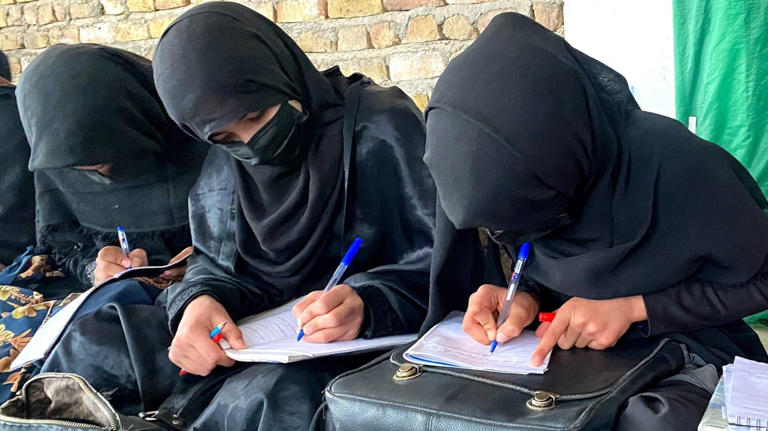
Misma hora, una niña de trece años llamada Farida doblaba por cuarta vez los mismos folios de matemáticas y los guardaba entre las costuras de la bolsa de tela con la que su madre la enviaba a comprar lentejas. Lo había aprendido de memoria: no caminar con otras, no llegar al mismo tiempo que las demás, no llevar nada que parezca un libro. La clase dura cuarenta minutos. Si llaman a la puerta, el cuaderno desaparece debajo del fardo de tela y la profesora abre con calma, porque el pánico se huele.
Entre estas dos escenas, separadas por seis mil kilómetros y un abismo moral, transcurre la historia que nadie en Bruselas quiere nombrar con exactitud.
Desde que los talibanes recuperaron Kabul en agosto de 2021, la arquitectura del apartheid de género más sistemático del siglo XXI se ha construido con una coherencia que resulta, en su propia lógica interna, casi admirable. Primero las universidades, después los institutos, luego las escuelas de primaria a partir del sexto curso. Después los parques, las peluquerías, los gimnasios, los baños públicos. Después la prohibición de trabajar en ONG internacionales. Después la de trabajar en la ONU. Cada decreto llegaba anunciado por el mismo silencio previo y seguido por la misma expresión de sorpresa calculada de la comunidad internacional, que tardaba dos semanas en redactar un comunicado y seis meses en olvidarlo.
Lo que ocurre en Afganistán no es una deriva autoritaria, ni una crisis humanitaria en el sentido técnico del término. Es la extinción legal y planificada de la mitad de una población de cuarenta millones de personas. Las niñas afganas nacidas después de 2009 no han conocido un solo año de adolescencia en el que el Estado no les haya prohibido algo fundamental. Para ellas, la pregunta no es qué carrera estudiarán, sino si alguna vez podrán caminar solas por una calle.
Y sin embargo, en junio de 2026, la Unión Europea recibe a sus representantes para explorar "canales de diálogo". El argumento de Bruselas es predecible porque es siempre el mismo: sin interlocución, Afganistán se convierte en un Estado fallido que exporta terrorismo y flujos migratorios. Es necesario mantener el contacto. Es necesario, sobre todo, ser pragmáticos.
Lo que se negocia en las salas climatizadas del Rond-Point Schuman no es, en realidad, la situación de las mujeres afganas. Es el precio de ignorarla
El problema con el pragmatismo es que tiene memoria corta y un precio largo. Cada vez que Occidente ha extendido una mano al régimen talibán sin condiciones innegociables, los talibanes han respondido con un nuevo decreto restrictivo, con la certeza aprendida de que el miedo a la inestabilidad siempre pesará más que la indignación moral. En 2022 prometieron moderar las restricciones educativas a cambio de ayuda humanitaria. En 2023 endurecieron la prohibición de las universidades. En 2024 cerraron las escuelas de primaria para niñas mayores de once años. Cada concesión occidental ha sido respondida con un apretón de tuerca, porque el régimen sabe que la paciencia de Bruselas es inversamente proporcional a su memoria.
Lo que se negocia en las salas climatizadas del Rond-Point Schuman no es, en realidad, la situación de las mujeres afganas. Es el precio de ignorarla. Un precio que se paga en términos de acceso consular, de ayuda condicionada, de acuerdos de control fronterizo. Las mujeres afganas no están en la mesa. Son el asunto que se pospone para una ronda posterior, cuando las condiciones sean más favorables, cuando el régimen haya "evolucionado", cuando el momento político sea el adecuado. El momento político adecuado lleva cinco años sin llegar.
Mientras tanto, en los barrios de adobe de las periferias de Kabul, de Herat, de Jalalabad, cientos de mujeres sostienen con sus propias manos la única institución que el Estado no ha logrado destruir del todo: la voluntad de saber. Las escuelas clandestinas no tienen nombre ni dirección fija. Se mueven de casa en casa cada pocas semanas. Las profesoras se comunican a través de aplicaciones con mensajes de autodestrucción y formatean sus teléfonos con la regularidad con la que otros cambian de contraseña. Las niñas aprenden a llegar con diez minutos de separación, a esconder los cuadernos entre los pliegues del burka, a sustituir los manuales de historia por ejemplares del Corán si llaman a la puerta.
La resistencia de las mujeres que enseñan en habitaciones sin ventanas demuestra que el deseo de aprender sobrevive a cualquier decreto
Es una logística de resistencia que tiene algo de prodigioso y mucho de insostenible. Las profesoras que son descubiertas no van a juicio porque no hay juicio al que ir. Hay detención, hay interrogatorio, hay lo que el régimen llama "orientación", que es una palabra que en los centros de la policía religiosa significa cosas que los informes de Amnistía Internacional describen con la frialdad necesaria para poder ser publicados. Los padres y hermanos de las mujeres implicadas son detenidos también, como cómplices, como prueba de que el control familiar es responsabilidad del varón. Los propietarios de los inmuebles pierden sus bienes. El castigo se irradia hacia afuera como una onda expansiva, diseñada para que nadie que conozca un caso quiera arriesgarse a ser el siguiente.
Y aun así, las clases continúan.
Farida, con sus trece años y sus folios doblados entre las lentejas, no conoce el nombre de ningún diplomático europeo. No sabe que a seis mil kilómetros de distancia unos hombres con corbata están sentados frente a los hombres que firmaron los decretos que le impiden ir a la escuela, discutiendo sobre estabilidad regional. Lo que sabe es que su profesora lleva tres años enseñándole álgebra en una habitación sin ventanas, y que eso es, en las coordenadas de su mundo, un acto de valentía que no tiene equivalente en ningún vocabulario diplomático conocido.
La pregunta que Bruselas no se formula en voz alta es sencilla: ¿qué mensaje envía al mundo el hecho de que un régimen que ha convertido a la mitad de su población en prisioneras domésticas reciba delegaciones oficiales de la primera potencia normativa del planeta? La respuesta también es sencilla, aunque incómoda: que si resistes el tiempo suficiente, si capturas a tu propia gente como rehén de tu supervivencia política, Occidente acabará parpadeando, ajustándose la corbata y ofreciéndote un asiento en la mesa.
La resistencia de las mujeres que enseñan en habitaciones sin ventanas demuestra que el deseo de aprender sobrevive a cualquier decreto. La pregunta es si la comunidad internacional estará a la altura de esa valentía, o si preferirá seguir llamando "diálogo" a lo que, visto desde Kabul, tiene el aspecto inequívoco de una rendición.

The Mouth of Truth is a reader-supported publication. To receive new posts and support my work, consider becoming a free or paid subscriber.
Free and voluntary gesture on Pay Pal