
Marco Visconti - Chapter I
by Tommaso Grossi
SERFS OR FREEMEN?
LIMONTA is a small tract of country covered with chestnut woods, which almost hide it from persons sailing from the point of Bellagio toward Lecco, between which places it is about halfway, and immediately opposite Liema. From the eighth century to the time when feudal tenures in Lombardy were abolished, Limonta was an appanage of the monastery of San Ambrogio at Milan, whose abbot added to his other titles that of Count of Limonta.
At the point where the abbot’s territory joined the district of Bellagio, and where a stone still marks the boundary, there was in 1329 an old castle, which was razed to the ground toward the end of that century.
This castle, at the date of our story, belonged to a certain Count Oldrado del Balzo, whose ancestors appear to have been at one time suzerains of Bellagio, now fallen under municipal rule. The Count Oldrado, though possessed of other estates in Lombardy, spent the greater part of the year here, in the society of his wife and an only daughter, who were, like himself, devotedly attached to their beautiful lake, which was set off by the fine sky, and the soft, joyous, and luxurious climate of Italy.
Rich, illustrious, and powerful, the family of Balzo had always been considered the natural protectors of the inhabitants of the district, all of whom, from father to son, had a traditional reverence and affection for the family name.
But, though Count Oldrado had succeeded to such a noble inheritance, he had not understood how to maintain it, and had forfeited in some degree the good feeling of the old vassals of the house. Not that his disposition was really bad, for he was, on the contrary, a good kind of man; but it fell to his lot to live in hard times and in difficult circumstances. He was weak, timid, and vain, and was not endowed with the requisite vigor for effecting as much good as he would otherwise have desired.
About that time the Emperor Louis, the Bavarian, had made a raid into Italy, and had deposed the reigning Sovereign Pontiff, John XXII, then resident at Avignon, by whom he had been excommunicated, and had set up an anti-Pope at Rome, in the person of one Pietro da Corvaria, a Minorite friar, who took the name of Nicholas V, whence arose that great schism which disturbed all Christendom.
The Duchy of Milan, which had so long groaned under the interdict fulminated against it on account of the Pope’s hatred of the Visconti, as determined adherents of the Ghibelline faction, declared at once for the anti- Pope. After the latter had in return removed the interdict from the Milanese capital, as well as from other minor towns and the more considerable villages, the churches were re-opened, and the few remaining clergy resumed their ecclesiastical functions. But in the country, especially around the Lake of Como, the people, less influenced by party spirit, remained faithful to the true Pope, and refused to open the churches, regarding the priests sent to them from the capital as schismatics and excommunicate. There were, as may be supposed, in the towns many who sympathized with the peasantry, and among the inhabitants of the country districts some that shared the views of the majority of the townspeople; so that life was not altogether pleasant in those unfortunate times, few places being free from profanation, violence, and sanguinary strife between the rival religious factions. Frate Aicardo, Archbishop of Milan, and the Abbot of San Ambrogio, together with most of the abbots of the richer and more distinguished monasteries, had already sought refuge in flight; and the choicest portion of the clergy, both regular and secular, were begging their way through Italy and France. The archi- episcopal revenues, the abbeys, and the minor ecclesiastical benefices were either forcibly seized and retained by the lay lords, or else given up to schismatic priests, partisans of the German Emperor.
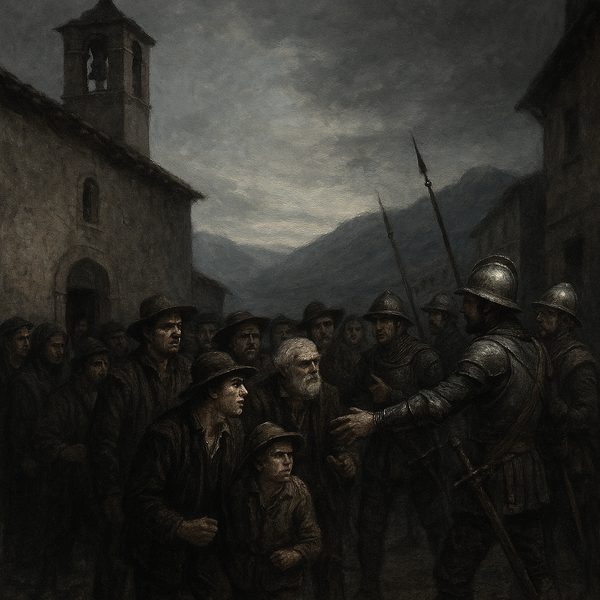
In this perturbed state of affairs, Giovanni Visconti, a relative of the princely family of that name, who had been appointed Abbot of San Ambrogio in the place of the true Abbot Astolfo da Lampugnano, had sent to Limonta, as steward of the monastery, a thorough-paced scoundrel, who had been condemned at Milan for coining and forgery. This man, in revenge for the fidelity with which these poor mountaineers served their liege lords, robbed and fleeced them without mercy, besides adding insult to injury by treating them as rebels. The people of Limonta turned to Count Oldrado, and besought him to use his influence with the new abbot, and also to intercede with the nobles so as to get their rights recognized. But they soon found it was labor lost.
The Count had so many scruples and fears that he would not commit himself to anything, nor risk falling into disfavor with the Visconti; and, though pitying in his heart these unhappy victims, he would have left them to be flayed alive rather than make up his mind to stir a finger to help them.
Pelagrua (for such was the name of the steward of the monastery) became more audacious every day, and at last bethought him of a plan to ruin, at one blow, all the people under his authority, by a bold act of rascality which would hand them over to him-body and soul, so to speak—once for all, and so spare him the necessity of perpetually contending with individuals. He set to work, therefore, to unearth some old documents relating to Lothair Augustus’s gift of all these lands to the monks of San Ambrogio. Armed with these, he meant to cause the people of Limonta to be adjudged not only vassals, as they were, but serfs of the monastery, and to summon them for this purpose before the tribunals of Bellano.
Bellano was then under the Archiepiscopal Court, by which term was meant an estate where the lord of the fief had his mansion and chapel, and the place where he administered justice; hence the decision of a suit of this nature properly belonged to the archbishop’s officials. But the archbishop having fled from the diocese, many estates belonging to him on the shores of Lecco and in Val Sassina, and among them this very Court of Bellano, had been appropriated by one Cressone Crivello, a powerful noble and partisan of the Visconti; and therefore the case of these Limonta people had now to be decided, not by the archiepiscopal officials, but by those of Crivello. This new lord was too open a friend of the false abbot of San Ambrogio, and too much interested in favoring the oppressions that he himself incessantly exercised upon his new vassals, for anything but evil to be expected from him for Limonta. The Limontese did not fail to cry out loudly or to do their best to gain Count del Balzo over to their side. All their efforts, however, were thrown away. The Count, although implored both by his wife, Ermelinda, and by his daughter Beatrice, who was as the apple of his eye, did not dare to undertake the defense of the wretched peasantry, who had to submit to be dragged before that incompetent and iniquitous tribunal, and await a sentence which they too well knew would be mere judicial murder.
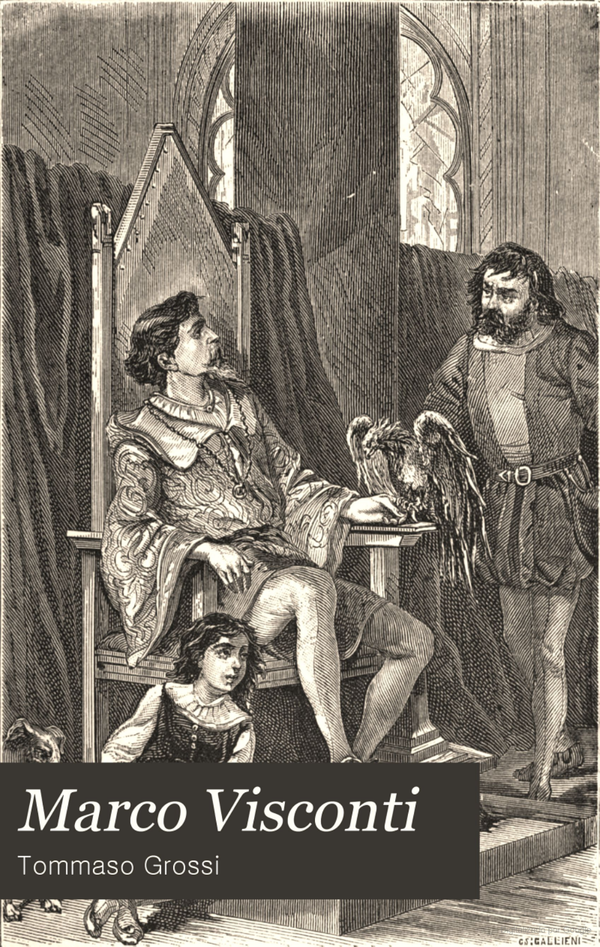
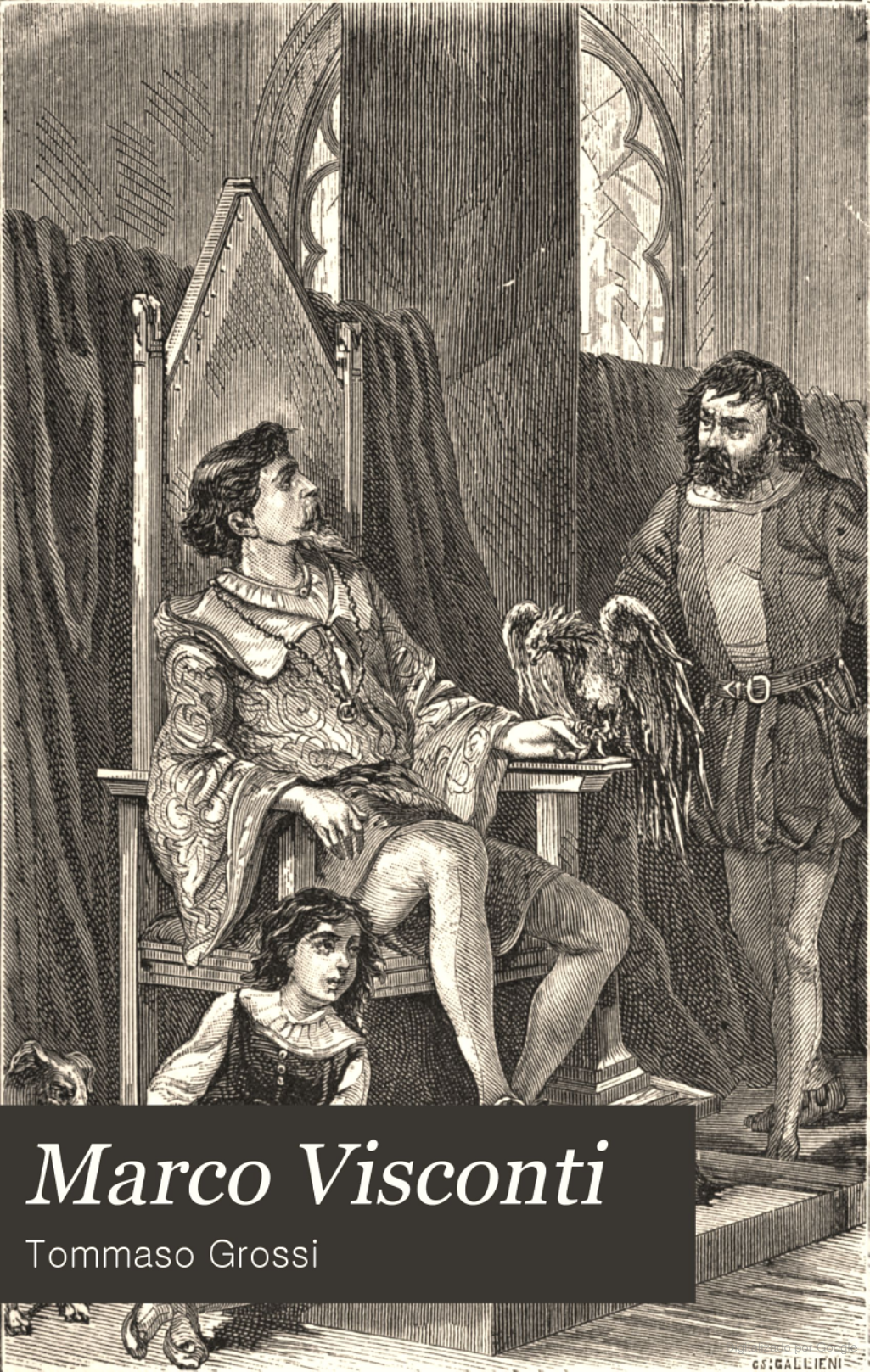
Toward evening, on the day of the trial, the Count’s falconer was standing on the battlements of the castle,and gazing down the lake as far as his eye could reach, to see whether any of the vessels were in sight which were expected back from Bellano. At last he descried in the distance a brown sail, which gradually increased in size as the bark that bore it neared the castle, and he at once hastened to carry the news to his lord. The Count was seated in a spacious hall, in an armchair with a pointed back; and a gay young page, lively as a Cupid, reclined on a low footstool at his feet. Condemned by his office to remain quiet in his place, the boy amused himself by playing with a large greyhound, which wagged its tail and pricked its ears with delight, and bounded about the hall in response to the caresses given to it.
'Count del Balzo was a man nearer fifty than forty years of age. From a square black cap two locks of hair fell on his temples; once they had been of a deep red, which, when young, he had called, and still continued to call auburn, although now they were decidedly grizzled, and even might be said to be white. A thin and freckled face ended in a sharp chin, on which, whenever the Count spoke, wagged a stiff, short beard of the same color as his hair. Two small gray eyes glared beneath his eyebrows, with an expression that had not lost its fire; but vanity and self-satisfaction were the main characteristics of that wooden face, with its artificially pursed- up mouth.
He bore on his wrist a superb gerfalcon, which seemed to revel in his caresses—now arching its neck, and uttering a low cry; now ruffling its feathers, and feigning occasionally to peck gently at the hand that approached it. When the falconer entered the hall the noble bird at once recognized its trainer, and, with outstretched wings and a somewhat louder cry, seemed to invite him to take it on his wrist.
“Well,” asked the Count, “are they coming from Bellano?”
“Yes, my Lord, they are. Michael and his son Arigozzo have just debarked on the beach at Carneccio.”
The Count, on hearing this, handed over the falcon to the page, who left the room with it, while he and the falconer remained to await the arrival of the two boatmen, who soon afterward entered the apartment.
The party consisted of Michael, the father, a man well on in years, and Arigozzo, the son, a fine young man, about twenty-eight years of age.
“What news?” the Count asked the old man.
“God’s will be done!”
“Come; tell me everything.”
“Well, then, I will tell you how it was: the bell rang, and there appeared in the archbishop’s portico that excommunicated wretch in the midst of three or four scribes and Pharisees, who began to mutter out some cock-and- bull story, out of a lot of old parchments, fit only to wrap up salt fish, which he kept tapping with his hand, as if he expected them to utter a confirmation of his impostures. At last he changed his note, and began to tell the following falsehood: ‘There was,’ he said, ‘evidence that the people of Limonta had always been serfs of the monastery, and he alleged as a proof that we always had had our heads shaved, and that it was but a short time since our hair was allowed to grow.’ Could anything be more infamous than that?”
“But were there no witnesses?” asked the Count.
“There was no lack of them,” answered Michael. “You may be sure that some would be found, even if our Lord were to be crucified afresh. There are plenty of people that would swear to anything for the sake of a cask of figs—a set of excommunicated Ghibellines who would sell their souls to the devil.”
“And what happened then?”
"After that crafty old fox had finished, our advocate, Lorenzo da Garbagnate, began to state our side of the case. He said plainly enough that we were neither the abbot’s vassals nor his serfs, and that all we have done for the last hundred years has been to pay him his dues in the shape of poll-tax and tithes; to lend him our labor during the olive and chestnut harvest; to load his boats; and, in fact, to do just what we were bound to do, and no more. And then he finished up with a most extraordinary expression, which he said was in our favor. " “Don’t you recollect, Arigozzo?”
“I remember he said something,” replied the son, “about some right we had, but I never heard of such a thing before.”
“Did he say that you were no longer serfs by prescriptive right?” suggested the Count.
“That’s it! The very thing!” exclaimed both father and son.
“You see,” said the Count, “I have all such matters at my fingers’ ends.”
“Then, to prove this fact,” proceeded Michael, “our advocate brought forward his honest witnesses, consisting of the old inhabitants from all parts of the country.”
“Then all appeared settled, did it not?” was the reply.
“No, my Lord. That Pilate of a judge invented something new, and said there were so many witnesses on both sides ready to swear to anything that the case never would end: it must be decided by the Ordeal of God.”
“The Ordeal of God!” exclaimed the Count.
“So, he said,” continued Michael; “and all the people began to applaud, as if he had given ever so fine a judgment. One called for the ‘Ordeal of Hot Iron.’ or Boiling Water,’ exclaimed another. ‘The Ordeal of the Crosses,’ said I, and told my Arigozzo here to offer himself on behalf of Limonta, which he accordingly did.”
“And did they accept him?”
“No,” said Michael; “because they were a set of rogues. But I have seen it written that there is no danger in the Ordeal of the Crosses. When I was a boy, I was once the champion, so to speak, of the monastery, and won a cause for them against Bellagio.”
“Come, don’t go on forever,” interrupted Count Oldrado, “but let us go back to our subject. What was settled at last?”
“There was a fine ending,” said the other, “the abbot’s advocate would have the Ordeal by Single Combat, and the archbishop’s deputy of course agreed with the other, and so there was an end of it.”
“A duel with cudgels and shields?” asked the Count; “because as it is an affair between common people, they have no right to weapons of chivalry.”
“Yes,” replied Michael, “with cudgels and shields.”
“And who will fight for you?” asked the Count'.
“Ah, that’s only too quickly answered. But let me tell you first who has offered himself for the monastery: a great demon with red hair and broad shoulders.”
“Then you have not accepted the ordeal, you lazy cowards!” exclaimed Del Balzo.
“My Arigozzo wished to come forward,” replied Michael, “but I would not have it. ’Twould be the last drop in my cup of misery were I to risk losing my son, who is the only comfort of his mother and myself, now that we are old and have no one else in the world to look to.” And, turning to his son, he took him by the arm, and added, “Look well to yourself, and take care not to mix yourself up in the affair. I won’t have it, unless you wish to kill me and your mother.”
"You have said so to me three times already,” answered Arigozzo; “so there is no help for it. Well, there are still four days left to find a champion.”
And for these four days I shall keep you shut up at home, said his father. “I’ll stay to look after you and you shall not defy me.”
“Oh! bother take the man!” said the son, shrugging his shoulders with a rough but affectionate gesture, and the subject dropped.
Then Ambrose joined in the conversation. “And cannot we find a champion?” he said. “Why not get one of those fellows who will do anything for money? Pay him well, and let him fight for the rights of the country.”
“No,” replied the Count, stroking his beard with one hand, “that cannot be. The privilege of putting forward for the ordeal a champion not personally interested belongs to the nobility and the religious orders alone.”
“Then,” continued the other, “we must either all be ruined, or get some native of Limonta to fight with the champion of the monastery.”
“Just so,” said the Count.
“Oh! if my Lupo were at home,” exclaimed the falconer, “or somewhere that I could let him know in time, those swaggering fellows should not have it all their own way.”
“Tell me,” asked Michael, “is not your Lupo page to Ottorino Visconti?”
“Yes,” said the falconer; “he was page at first, when he went away five years ago; but now he is his squire, and the noble lord is very fond of him, and never likes to be without him.”
On hearing this the boatman looked greatly relieved, and exclaimed, “Then let us be off to Como at once, without losing a moment.”
“What!” said the falconer. “Do you know that my Lupo is at Como?”
“I know,” said Michael, “that Ottorino Visconti is there;” and turning to his son, he added, “You saw him, too, you know, when we were there on Tuesday.”
“What! Was he that young knight who saluted us on the pier, and spoke to you?” said Arigozzo.
“Exactly so,” replied his father.
“Oh! I saw him; and it was the same who was such a friend to poor Count Lionello—bless his sainted soul! —my Lord’s son here, and who stayed months at the castle to bear him company.”
“Then,” exclaimed the boatman joyfully, ‘let us go home and take a mouthful, and be off directly, while the lake is smooth. The boat is ready, I suppose?”
“Yes,” answered his son; “sails, oars, awnings are all there, as, in order to get here without delay, I did not take anything out.”
The father laid his hand on his son’s arm, bowed to the Count, and made for the door, saying to the falconer, “Shall I tell him all my news in your name?”
“Yes, do so. Say everything in my name,” was the answer.
“Good-by, then, till tomorrow,” said the other; “you will see me back with him,” and went off.
“Michael,” cried the Count after him, “remember to act as on your own account. Don’t let anyone think I have had a hand in the matter. I don’t wish to get into trouble for you. Do you understand?”
“I understand,” replied the boatman.

Will follows the "CHAPTER II – The People Act". Every Friday a new chapter will be published which will also contain the link to the previous one, in any case you will find the list of chapters and their links on the following page: "Marco Visconti - CONTENTS" https://truthdead.ghost.io/ghost/#/editor/post/69976fe24b4dd60001978040
Of course, only published chapters have a link to the relevant page.
The first chapters will be open to all, after which they will be reserved for paying subscribers.
I invite you to subscribe as soon as possible by taking advantage of the discounts provided.
Later the Spanish and Italian versions will also be published, as well as the episodes of the television series produced in Italian, and possibly subtitled.
Enjoy the reading.



The Mouth of Truth is a reader-supported publication. To receive new posts and support my work, consider becoming a free or paid subscriber.
This space does not ask for payment to enter: you enter because you recognize an echo,
a fragment of yourself, a threshold worth preserving.
If you wish to support this work with a free and voluntary gesture, you may do so here: