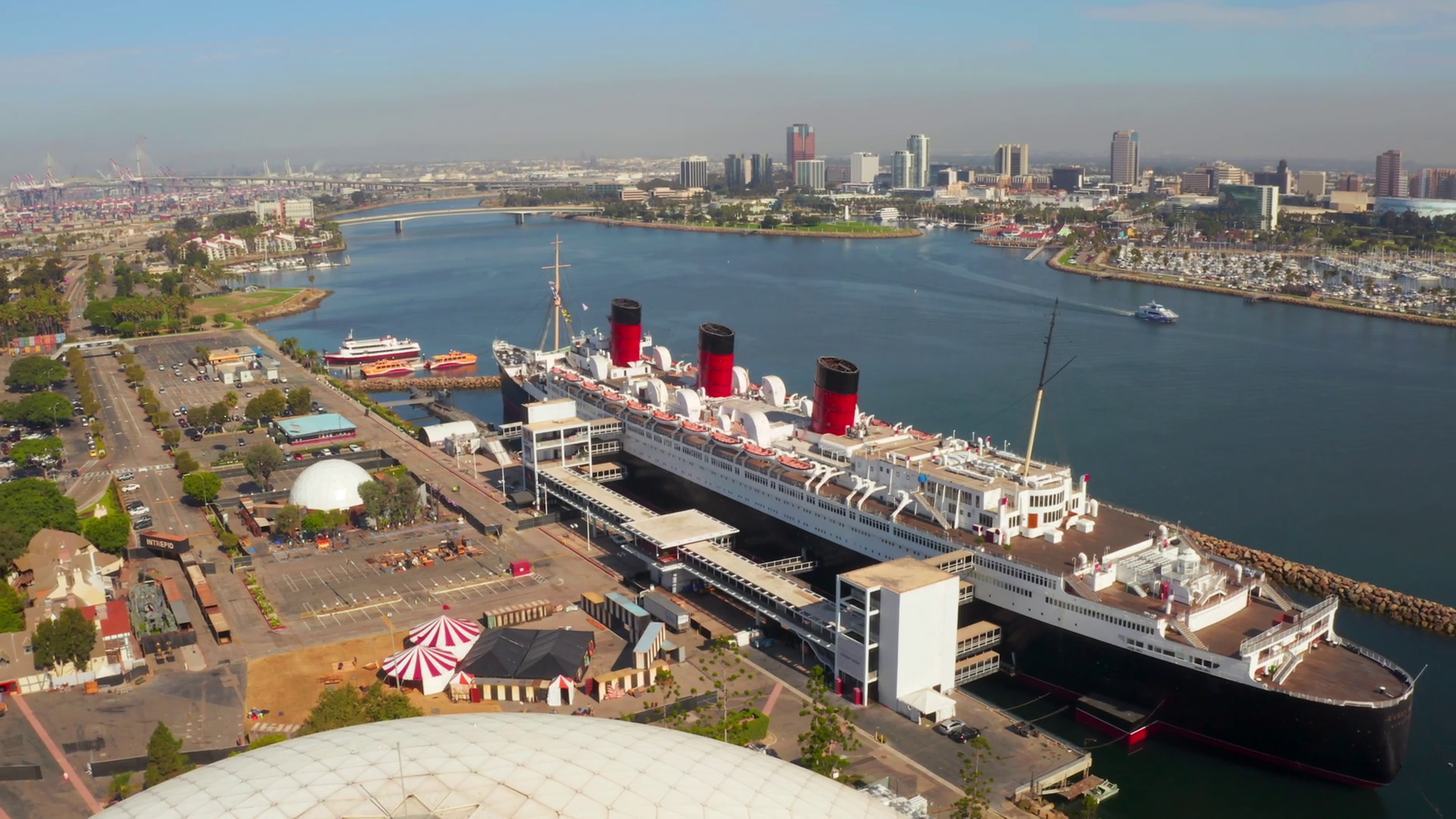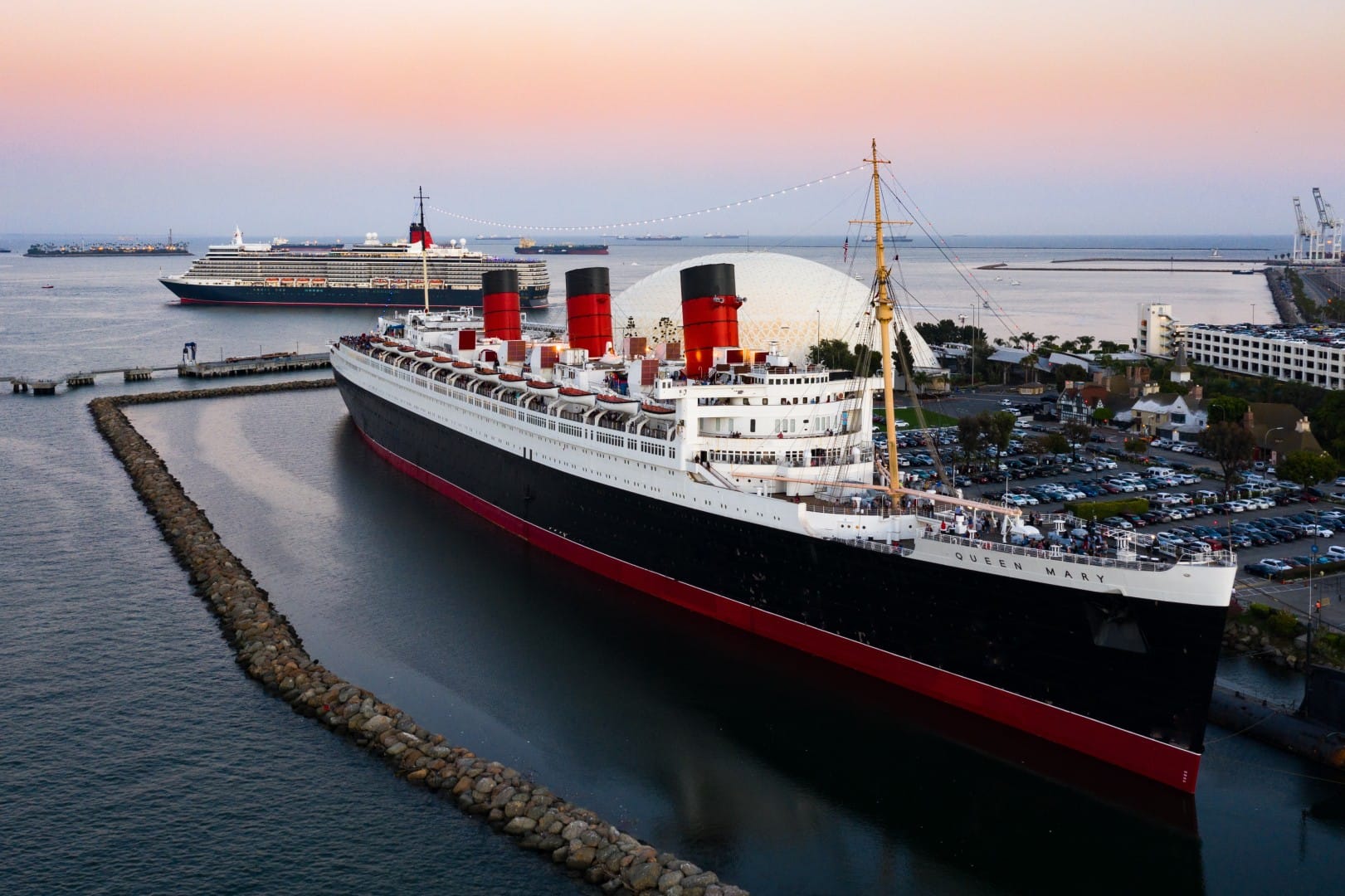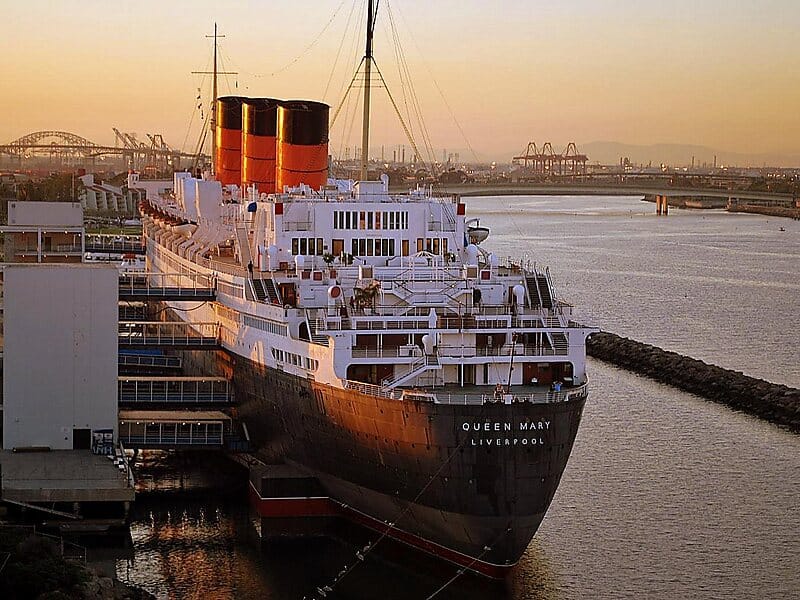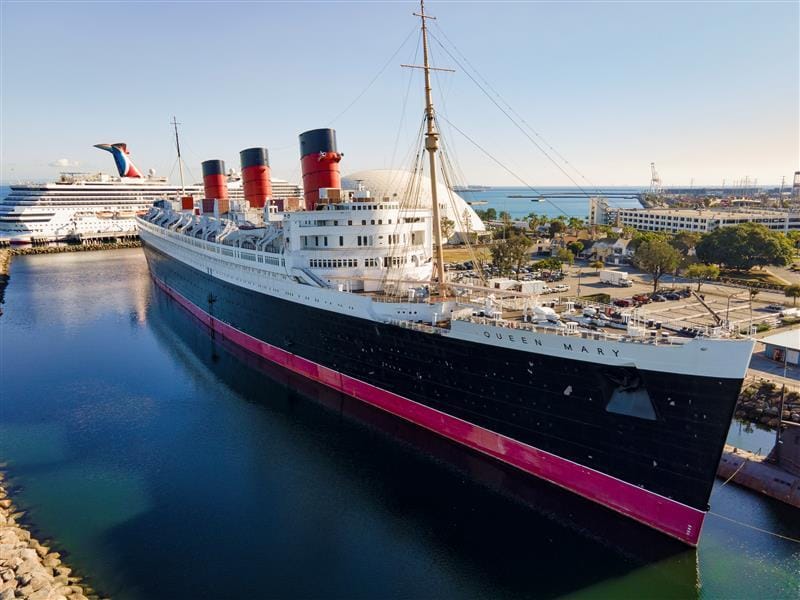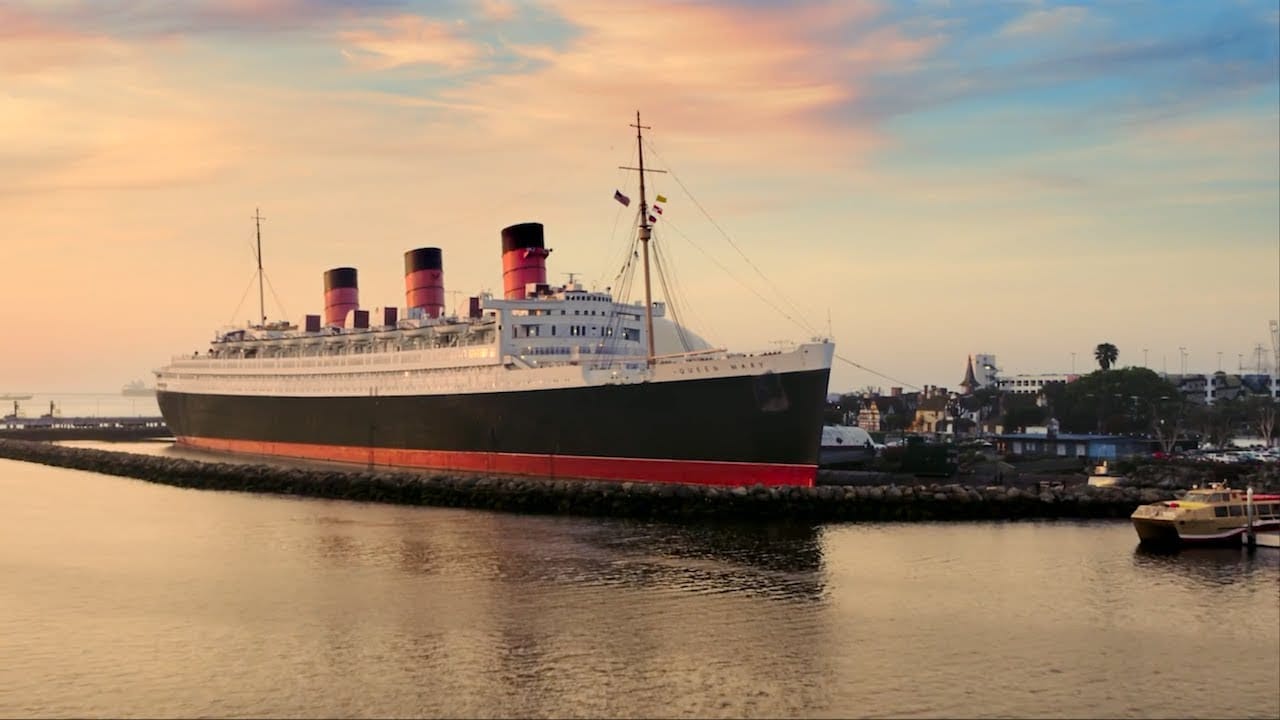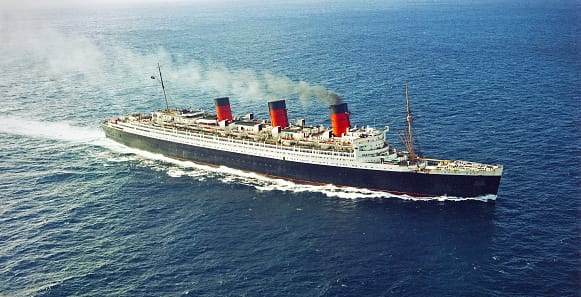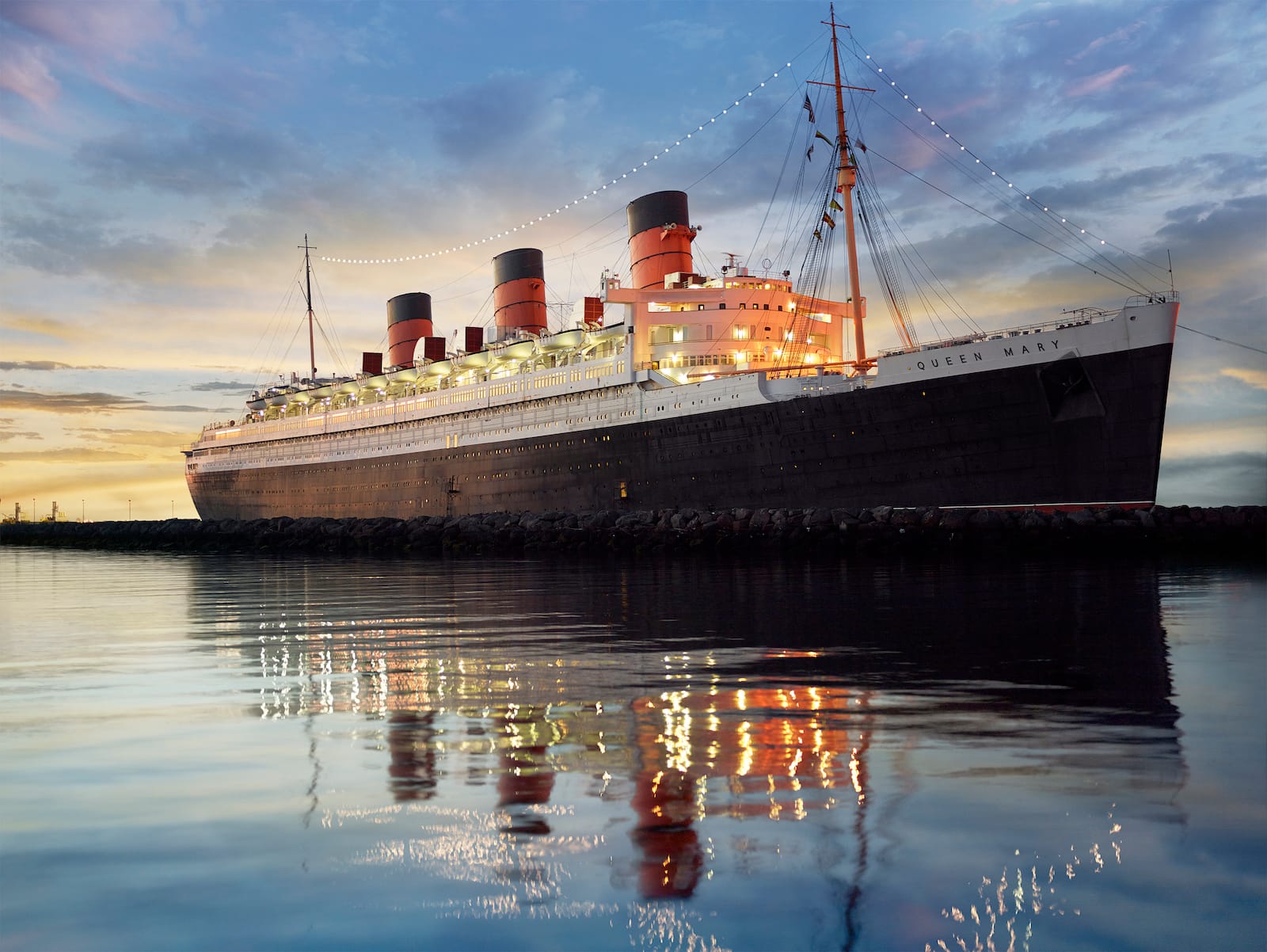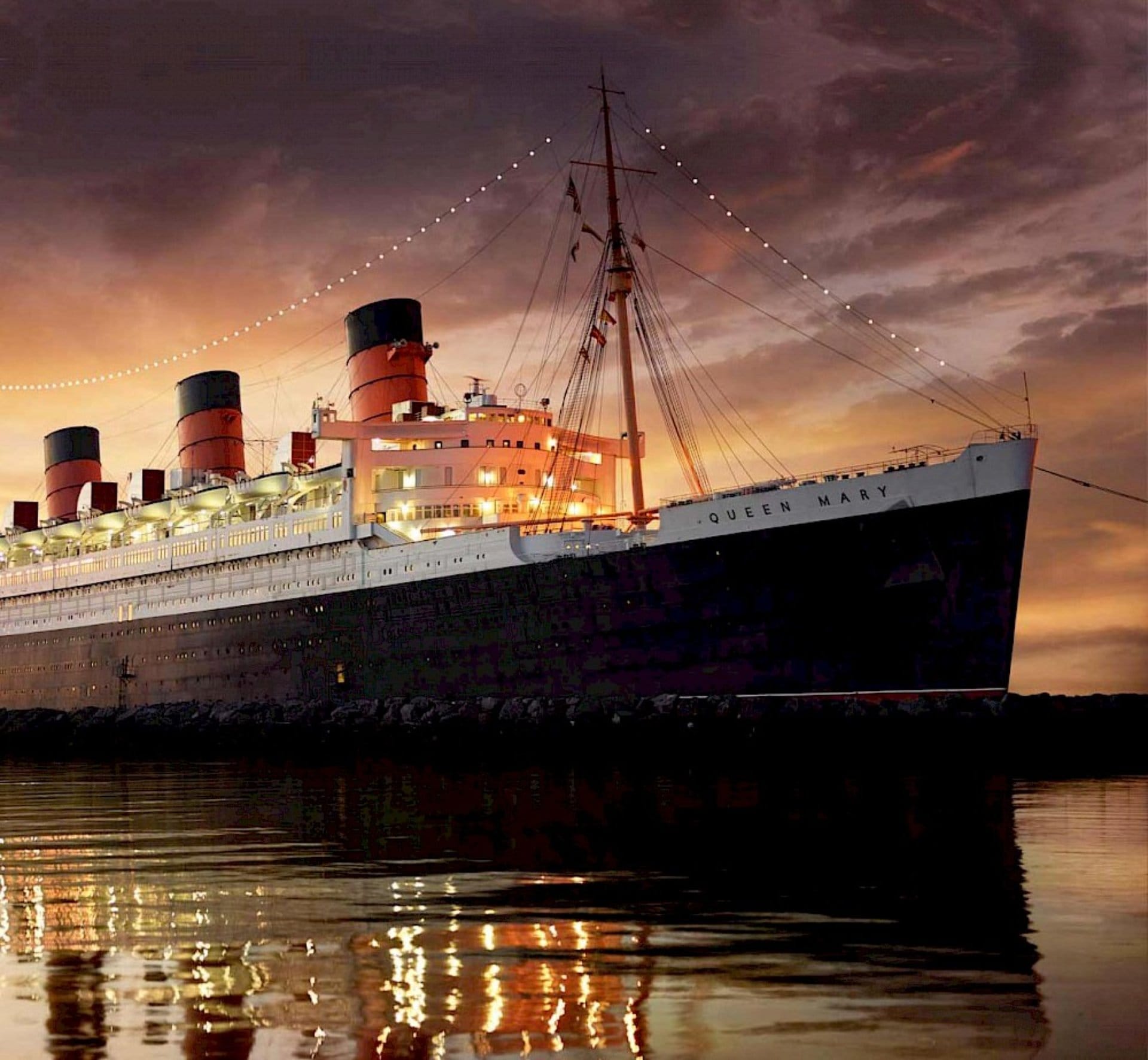

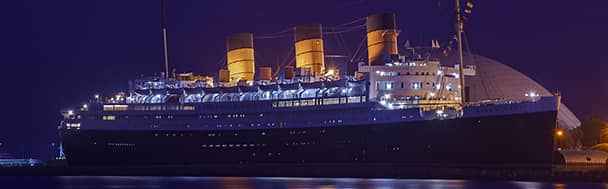
The British ocean liner "RMS Queen Mary"
The British ocean liner "RMS Queen Mary" in Long Beach, California, USA
When the RMS Queen Mary set sail in 1936, it became an icon of luxury and transatlantic speed, as did other prominent ships in Spain, such as the Príncipe de Asturias or the Infanta Isabel de Borbón, which linked Europe with America by transporting passengers and mail. The Queen Mary, an Art Deco ocean liner, broke speed records and welcomed celebrities, dignitaries, and royalty during its voyages.
During World War II, the ship was transformed into a troop carrier, temporarily abandoning its luxuries. After more than 30 years in the Atlantic, in 1967 he retired to Long Beach, where today it serves as a hotel, exhibition center, and monument to maritime history.
Its decks allow you to travel through the living history of a ship that went from floating palace to military transport and then to a tourist landmark. Over the years, legends circulate about alleged apparitions, but what remains proven is their historical and cultural importance. For Spanish travelers, visiting it is a unique opportunity to get to know an ocean liner that, like our historic ships, marked its era and continues to fascinate generations.