
Regensburg Cathedral
History
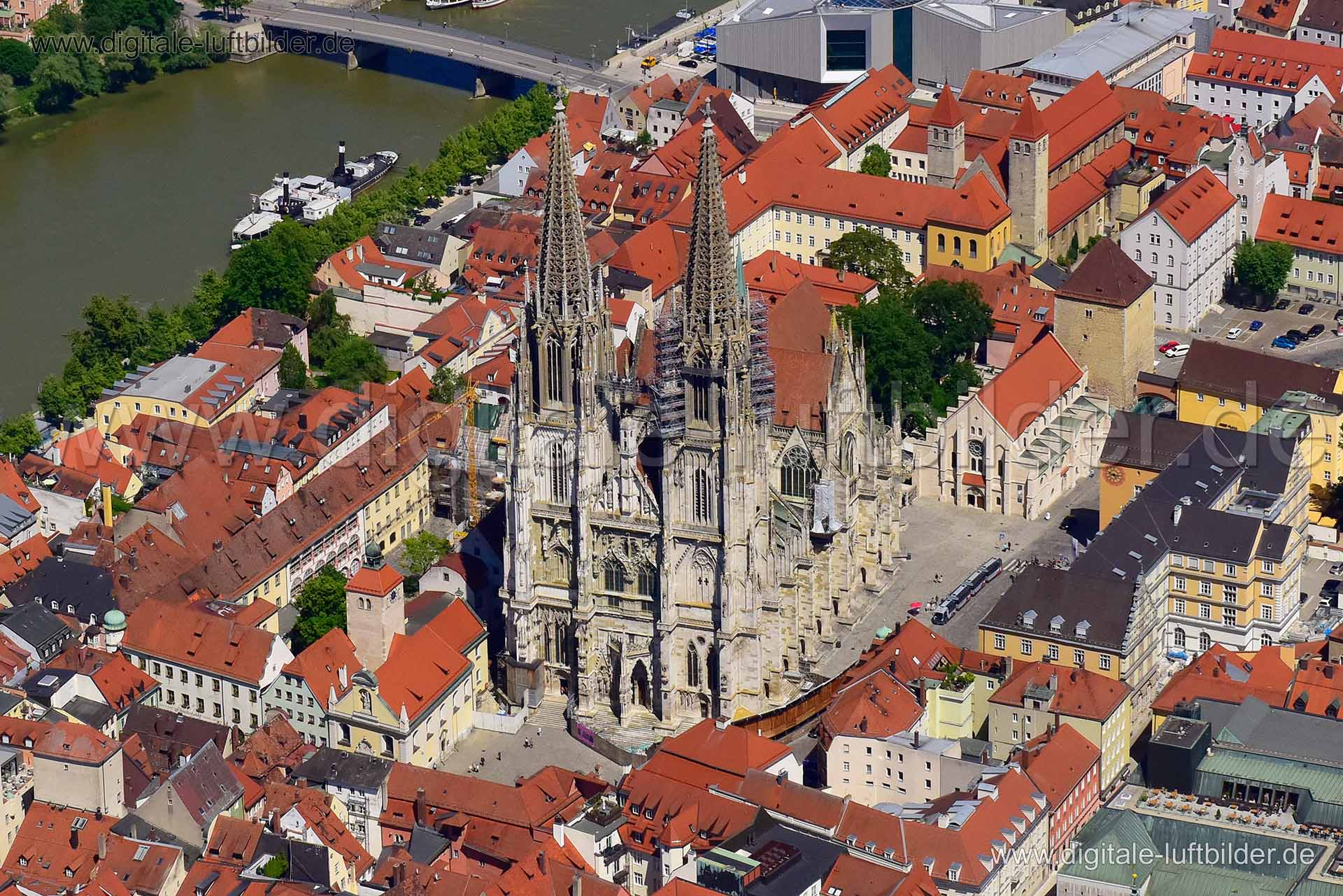
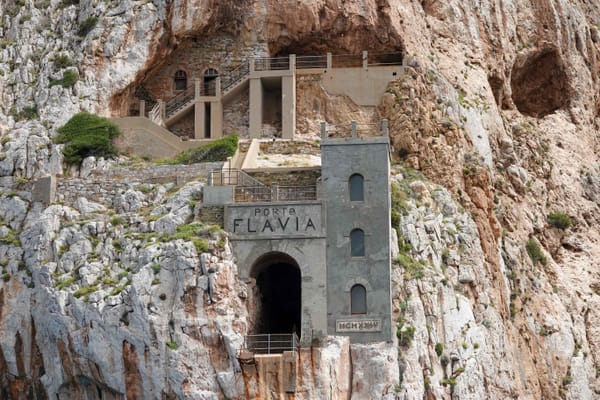
The original church, known as Niedermünster, was built around 700 and is located west of the current cathedralNiedermünster. It was positioned some distance away from the Porta Praetoria, a northern gate of Regensburg's old legionary fortress, known as Castra Regina. Although it was originally a tomb for Erhard of Regensburg, it was first used as a chapel for a royal family (Erhard of, a ducal family). Niedermünster burned down in 1273, and due to the city's strong economic status at the time, a new cathedral was constructed.
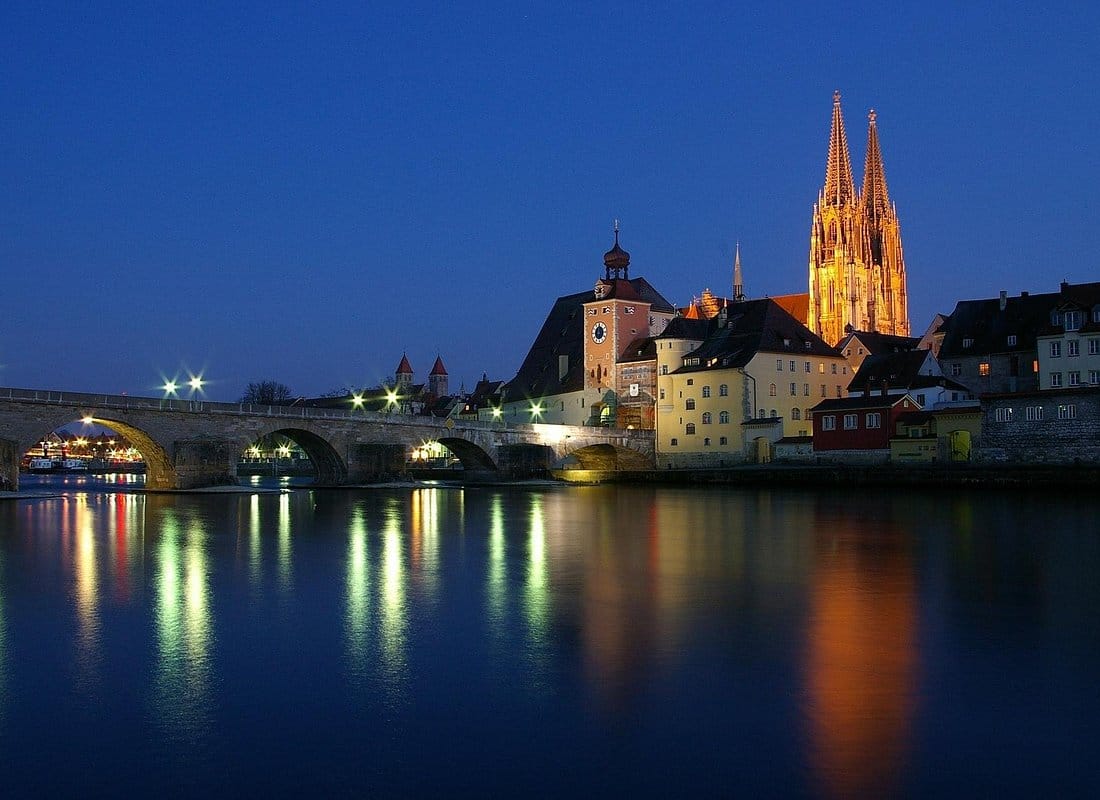
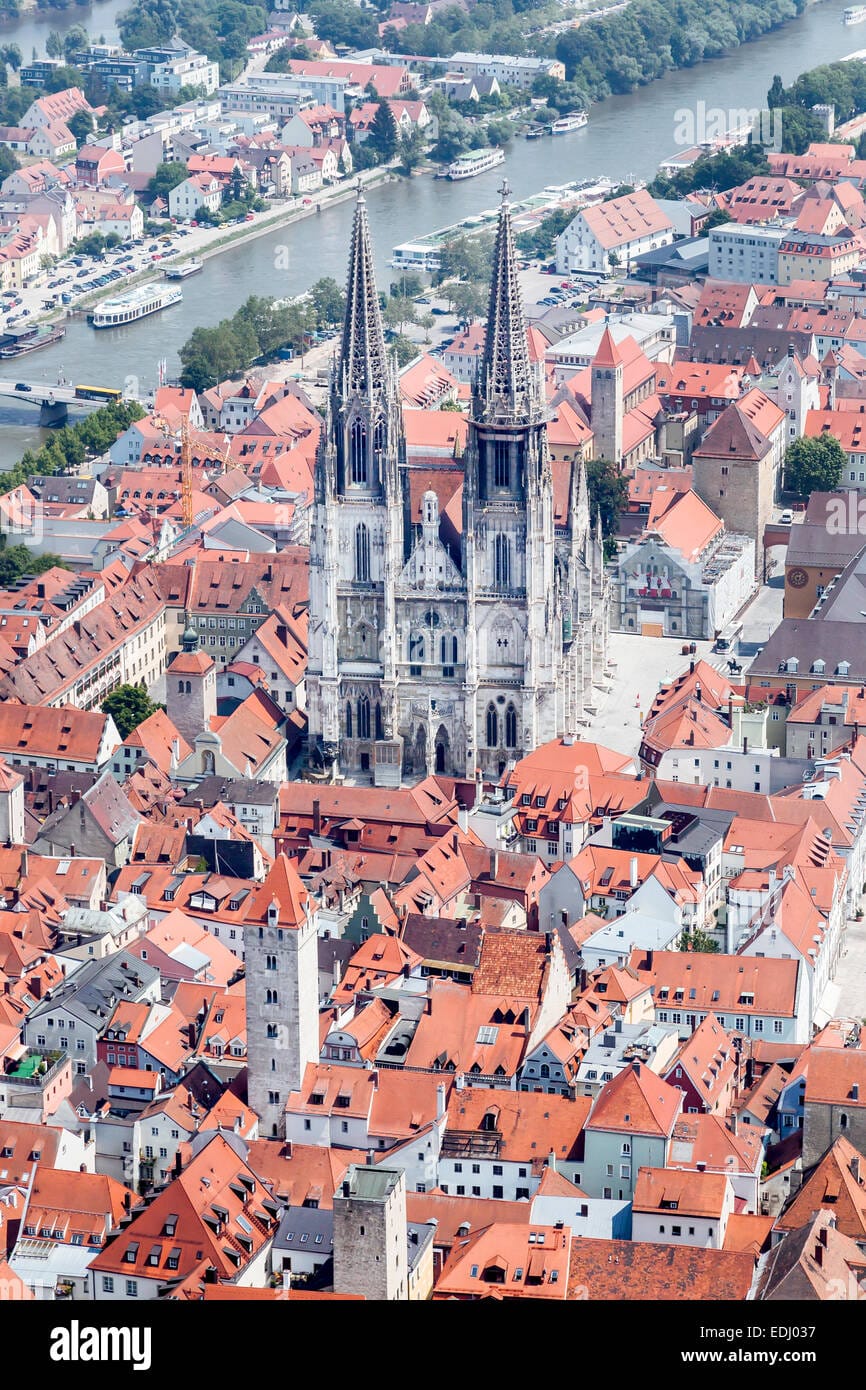
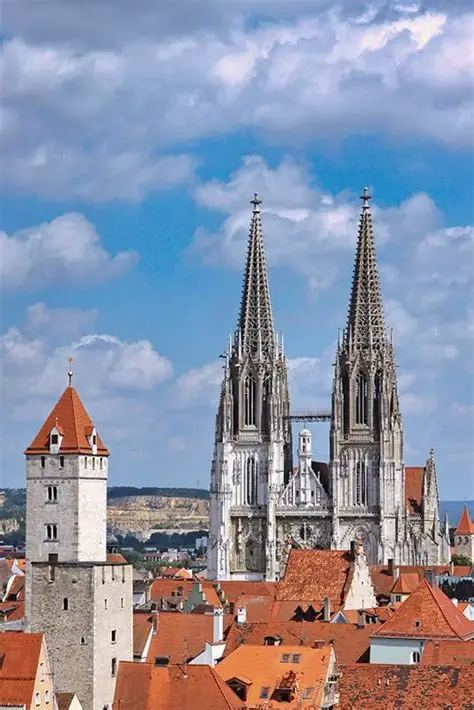
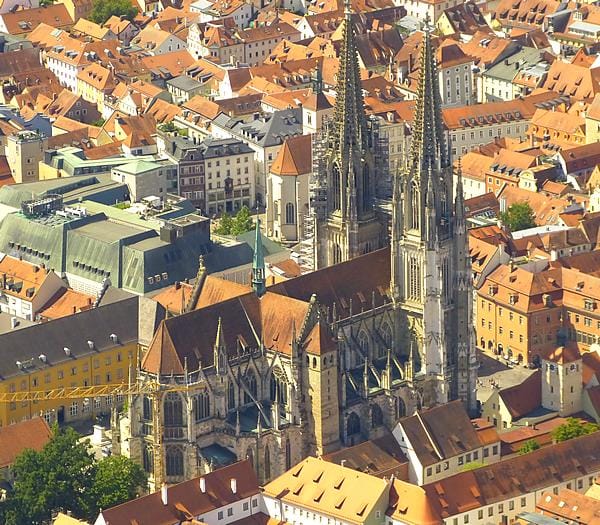
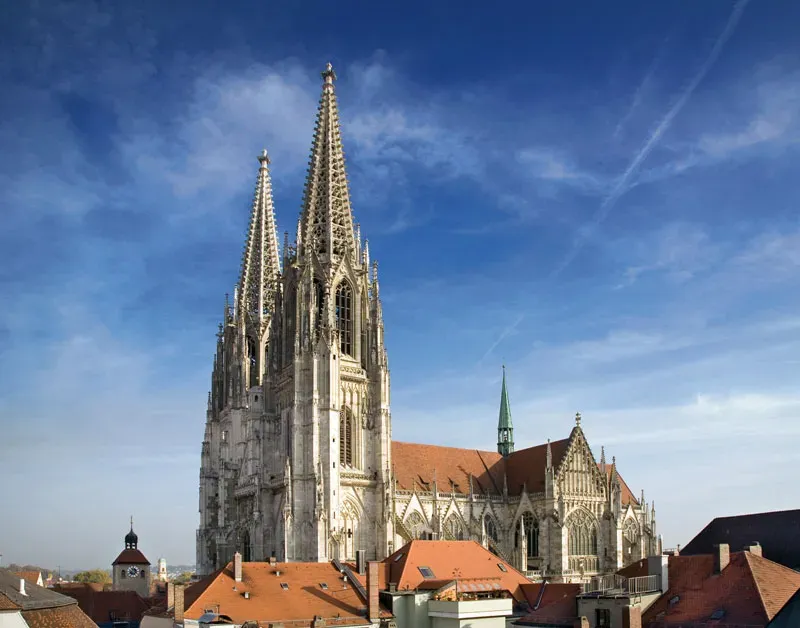
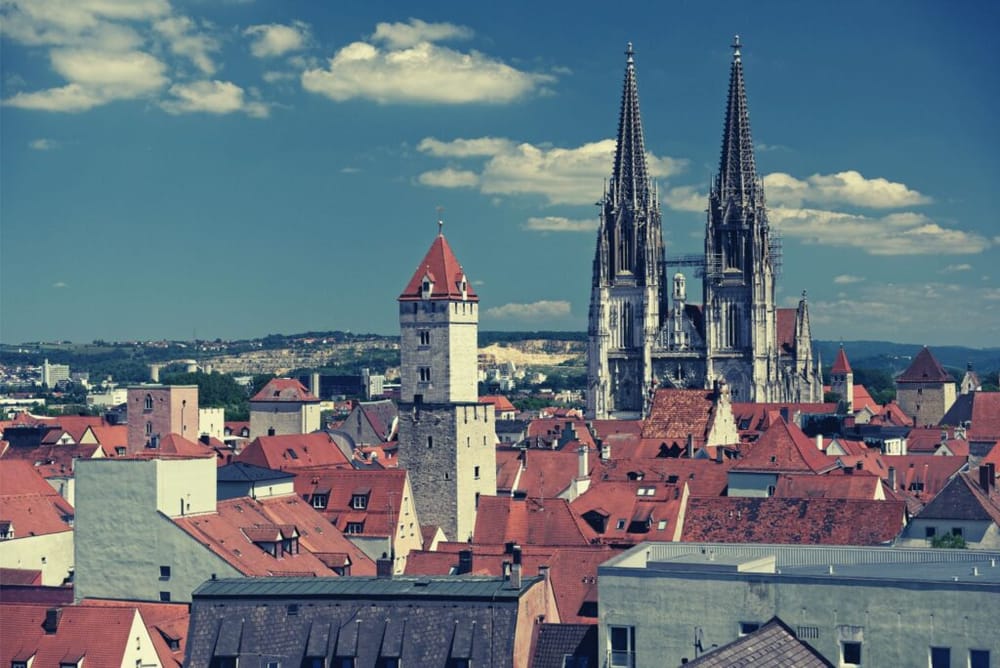
The architect who took over supervision of the new cathedral in 1280 was trained in France, and as a result, French Gothic architectural themes were incorporated. This included a central nave that divides into three sections, buttresses, vaulting, and two towers over a facade.
By 1320, the three choirs of this cathedral were ready for use, and between 1385 and 1415, the main entrance to the West was completed. Most of the edifice was finished around the year 1520, and this was also the opening year for the cathedral.
One of the cathedral's builders, Mathes Roriczer, documented a method for determining architectural proportions from a ground plan. This technique, called ad quadratum or "of quadrature," depicts elevation on a ground plan using a series of polygons. From this technique, he was able to develop the proportions of the cathedral's pinnacles.
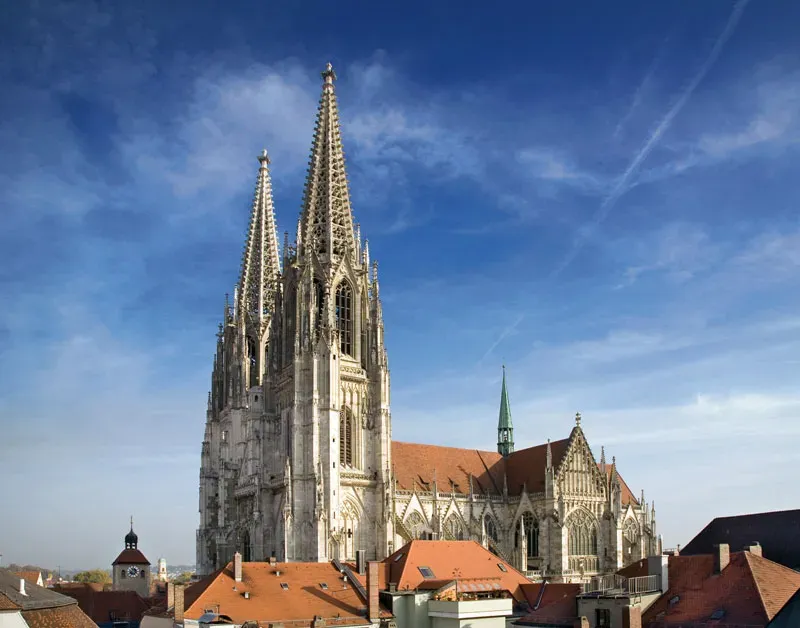
In the 17th century, the cupola located at the crossing of the transept, along with other sectors of the cathedral, was renovated in a Baroque style. With this renovation, the frescoes that were created for the All-Saints' Chapel were plastered over and remained hidden until they were uncovered in the 19th century., Following this, between 1828 and 1841, the cathedral underwent a Neo-Gothic renovation, which King Ludwig I of Bavaria commissioned. With this renovation, the cupola was demolished and replaced with a quadripartite rib vault. Between 1859 and 1869, the towers as well as their spires were completed, and three years later, the cathedral was fully complete.
The state-run Dombauhütte (cathedral building workshop) was established in 1923 to oversee, maintain, and restore Regensburg Cathedral. One of the organization's restoration projects occurred during the 2000s. Another project the organization was involved in happened in the 1980s, during which the construction of the crypt mausoleum and archaeological exploration of the central nave took place.