

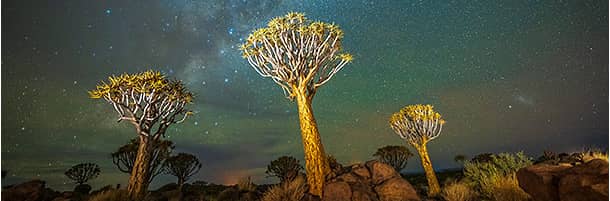
Quiver Trees, Keetmanshoop, Namibia
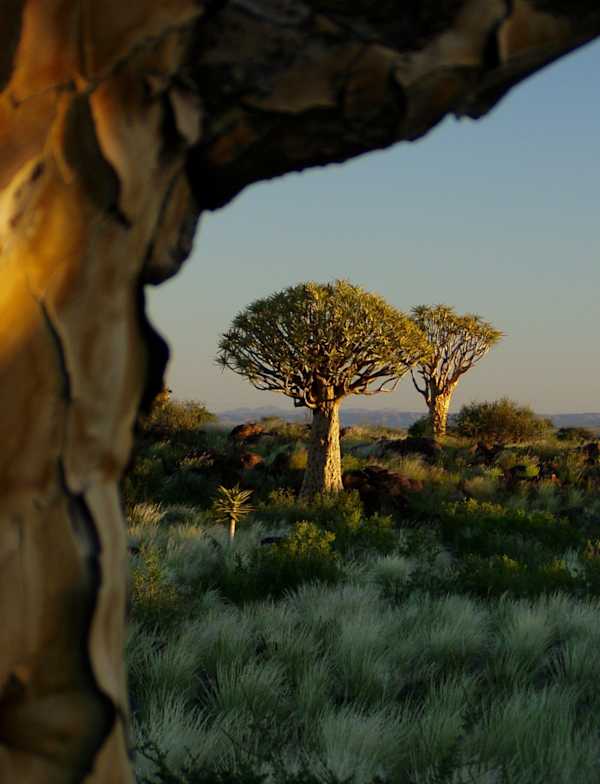
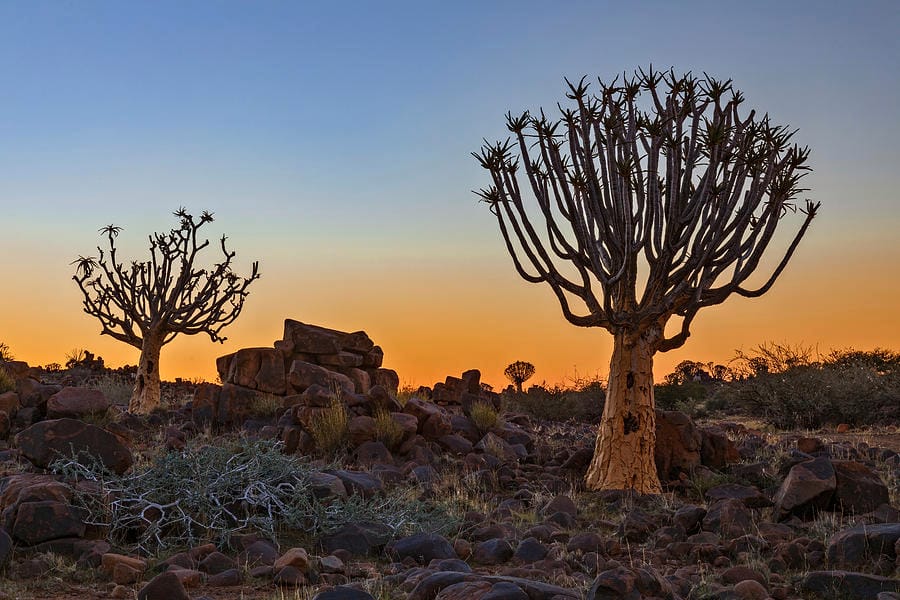
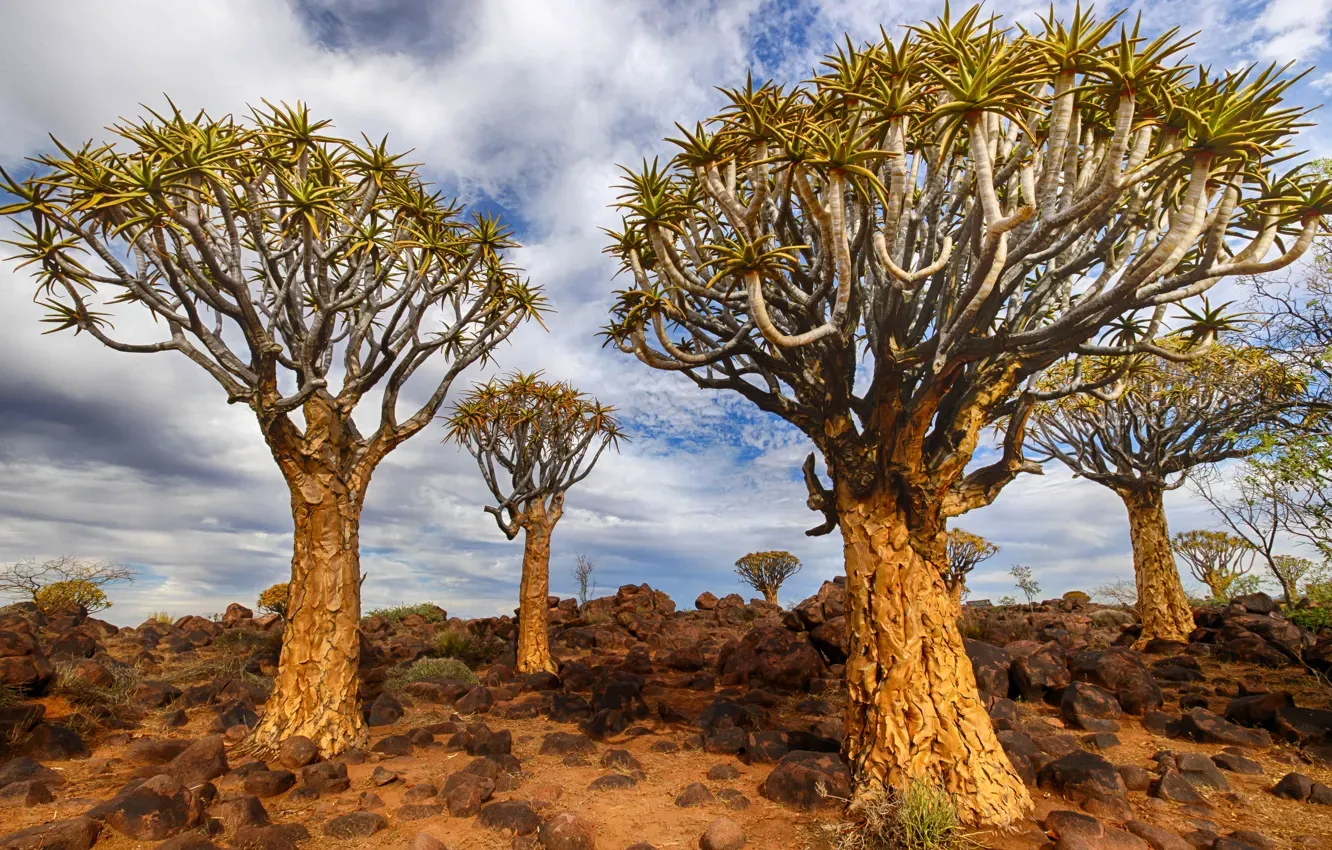
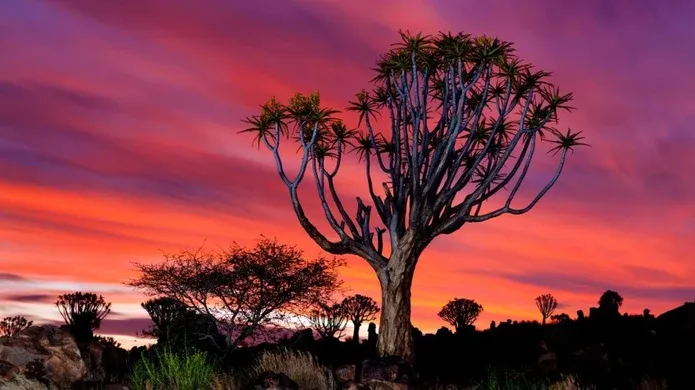
Of all the plants in the world, the quiver tree looks like something out of the future.
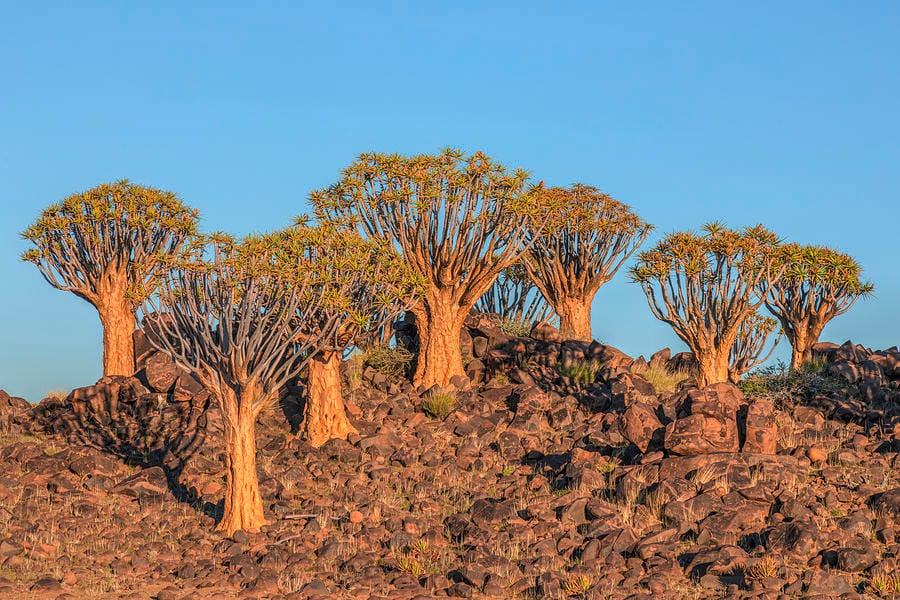
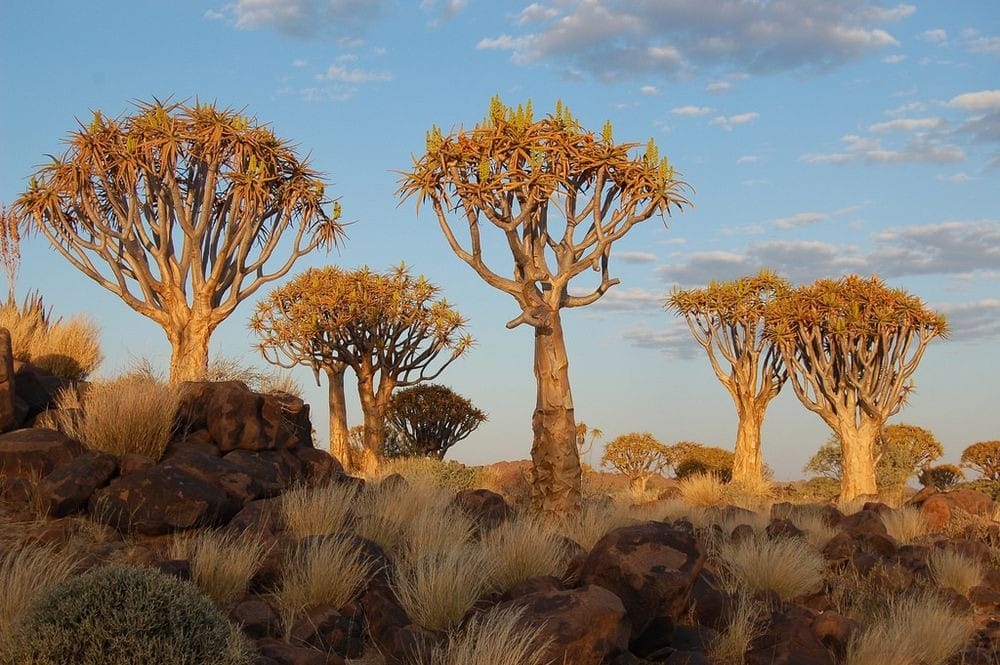
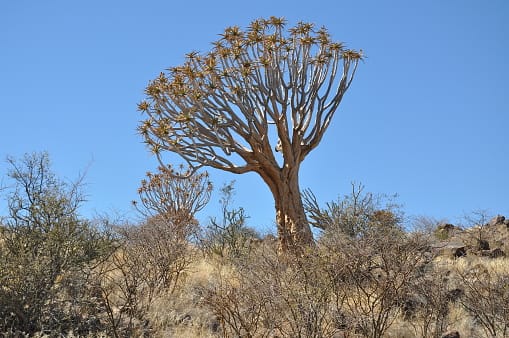
Native to southern Africa, especially Namibia, these impressive giants are not real trees, but a species of aloe adapted to the scorching desert sun.
Their thick trunks store water and their branches reflect heat, helping them survive in extreme conditions.
They can reach up to 7 meters in height and some live more than 100 years. In addition, they are essential to their ecosystem, offering perches and nesting sites for birds, such as weavers, which are very common on their branches.
The Quiver Tree Forest near Keetmanshoop is a national monument and one of the most photographed places in Namibia. With very clear skies, the desert becomes a perfect setting to observe the Milky Way.
A curiosity is that, in Spain, in the Botanical Garden of Madrid you can see specimens of Aloidendron dichotomum, allowing you to get to know this African wonder up close without leaving the country.
Quiver trees remind us of the strength and creativity of nature in the most unexpected places.



Truth Dead is a reader-supported publication. To receive new posts and support my work, consider becoming a free or paid subscriber.