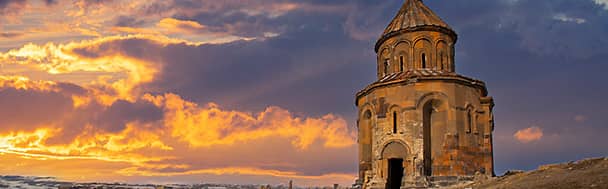
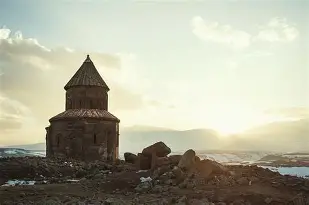
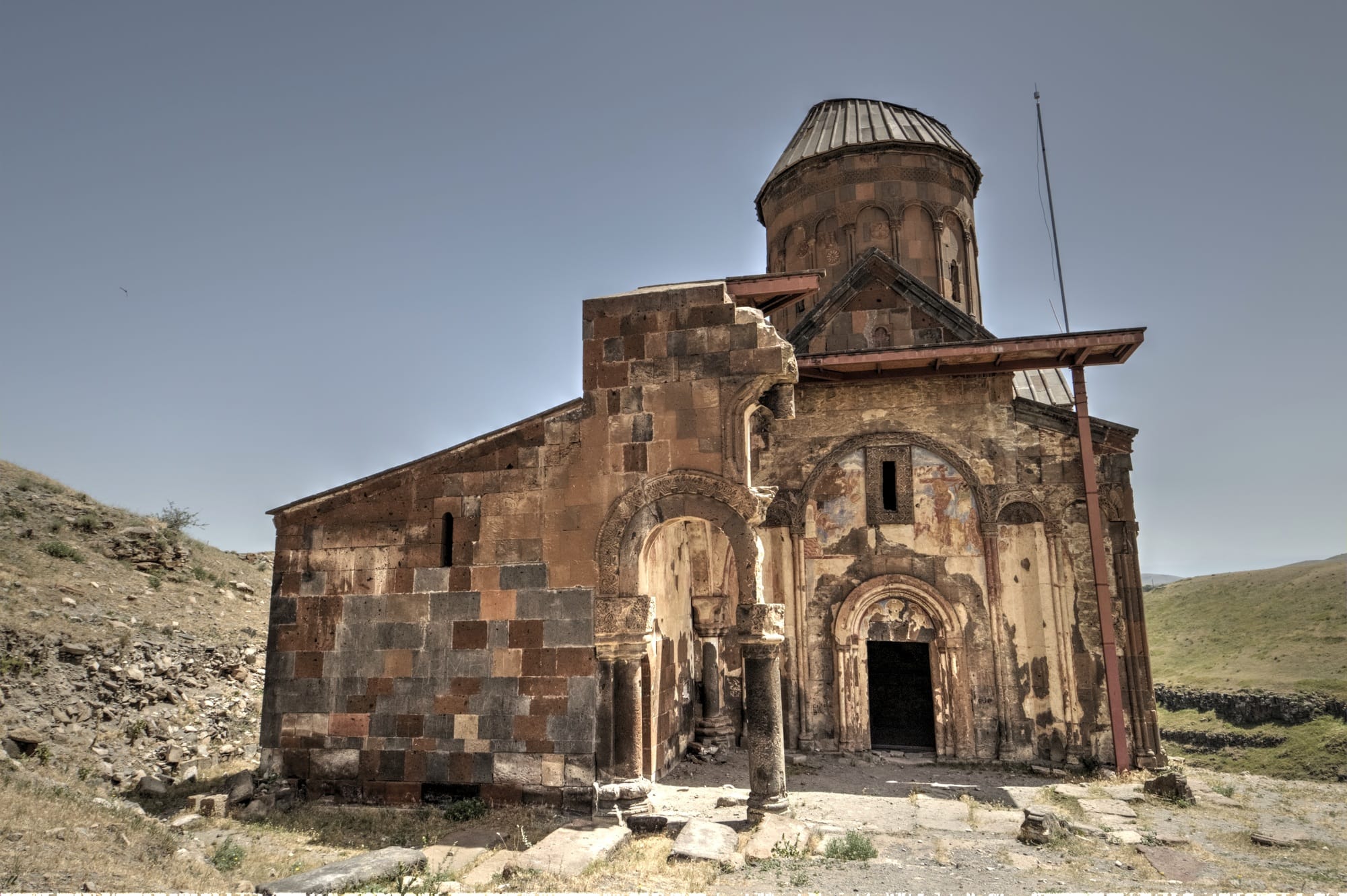
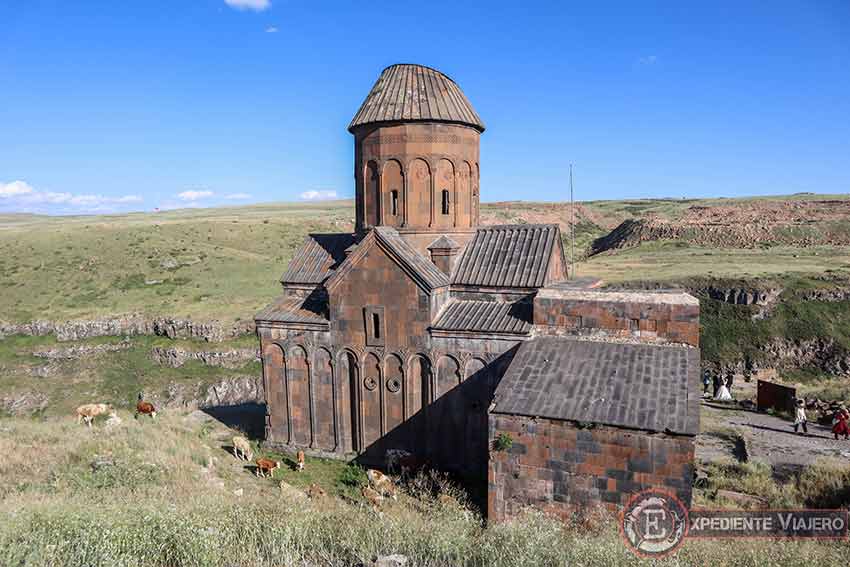
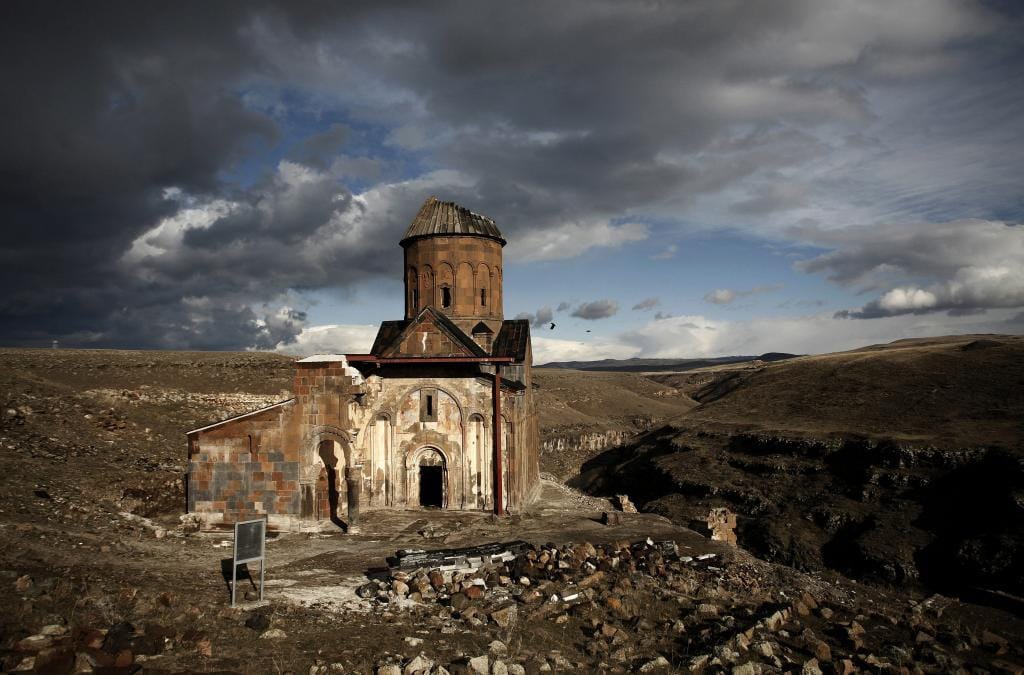
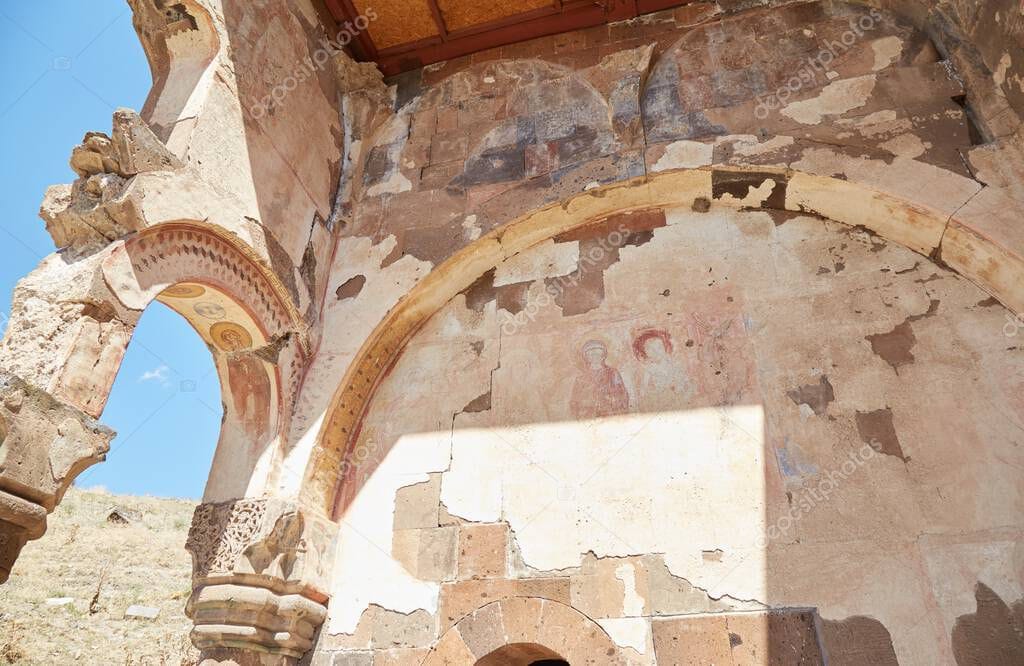
Church of St. Gregory in the ruins of Ani, Kars, Turkey
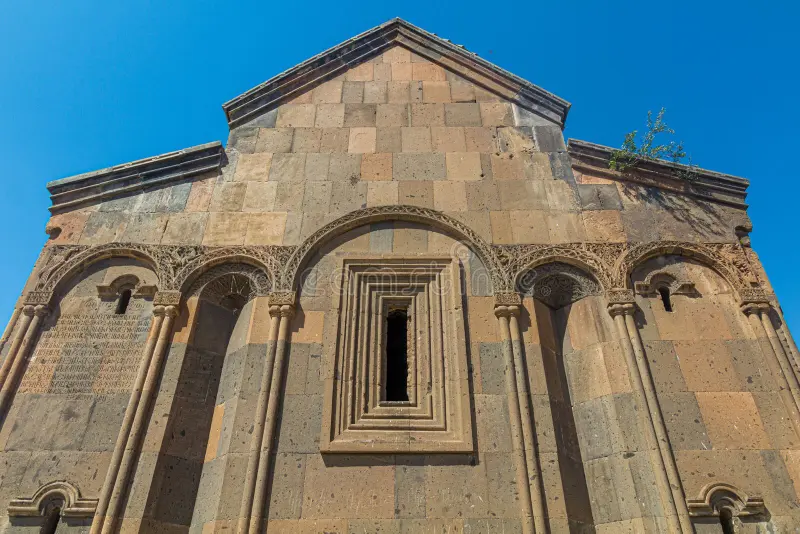
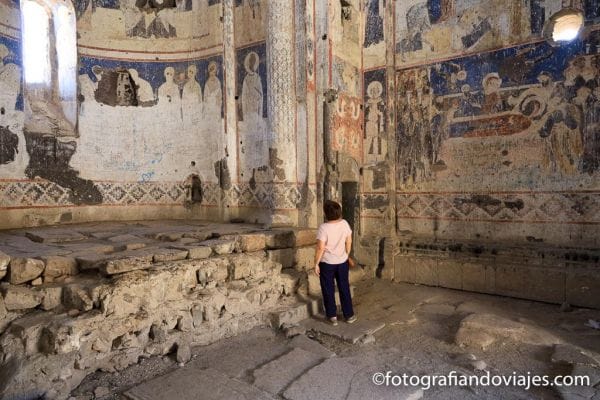
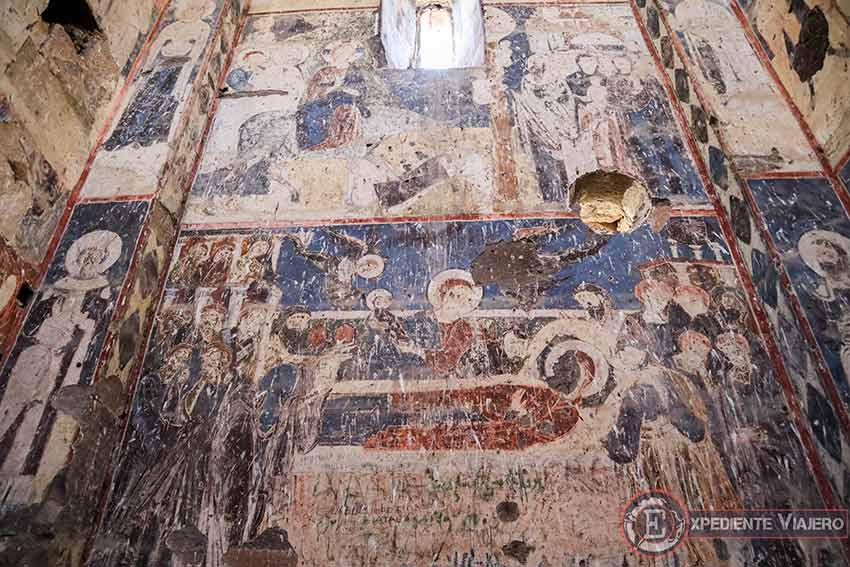
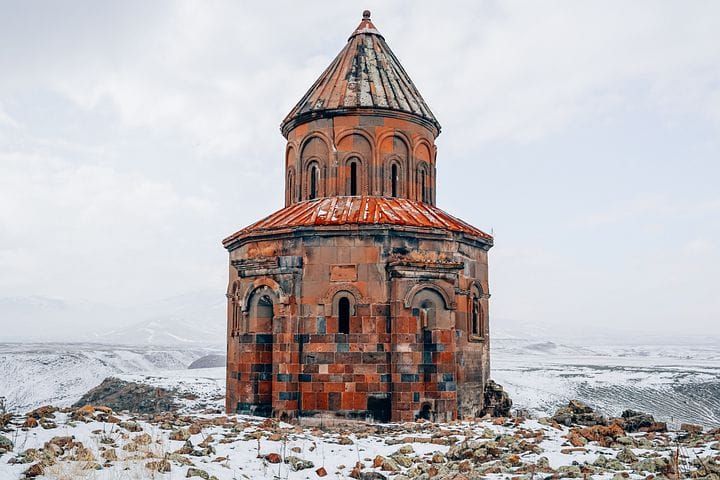
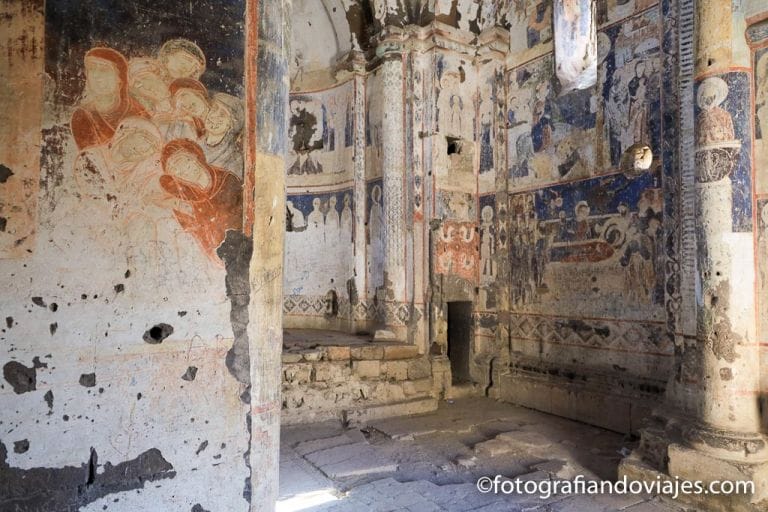
On a windswept plateau in eastern Turkey and along the border with Armenia, the ruins of Ani stand out sharply on the horizon. The Church of San Gregorio, built in dark volcanic stone, still raises its cylindrical tower like a lighthouse that watches over the silence of the plain. Ani was once called the "City of 1,001 Churches"; Its architects experimented with arches, domes, facades and geometries that would inspire distant traditions, including European Gothic. Between cracks and ruins, his footprint is still alive.
This tranquility contains an exciting story. A millennium ago, Ani was the Armenian capital and an important crossroads on the Silk Road, with crowded streets and imposing walls that marked the commercial and cultural pulse of the region. Earthquakes, invasions and new trade routes caused its decline, although the city never disappeared. Today, archaeologists and restorers continue to reveal its details.
The Silk Road also left echoes in Spain: Valencia, with its silk tradition from the Middle Ages to the eighteenth century, is considered a historical enclave linked to its western section. To visit Ani is to connect that shared legacy and to let yourself be enveloped by a city that, stubbornly, continues to tell its story.

Iglesia de San Gregorio en las ruinas de Ani, Kars, Turquía
En una meseta azotada por el viento, en el este de Turquía y junto a la frontera con Armenia, las ruinas de Ani se recortan nítidas en el horizonte. La Iglesia de San Gregorio, construida en piedra volcánica oscura, aún eleva su torre cilíndrica como un faro que vela sobre el silencio de la llanura. En otro tiempo, Ani fue llamada la “Ciudad de las 1.001 Iglesias”; sus arquitectos experimentaban con arcos, cúpulas, fachadas y geometrías que inspirarían tradiciones lejanas, incluso el gótico europeo. Entre grietas y ruinas, su huella sigue viva.
Esta tranquilidad encierra una historia apasionante. Hace un milenio, Ani era capital armenia y un importante cruce de la Ruta de la Seda, con calles abarrotadas y murallas imponentes que marcaban el pulso comercial y cultural de la región. Terremotos, invasiones y nuevas rutas comerciales provocaron su declive, aunque la ciudad nunca desapareció. Hoy, arqueólogos y restauradores continúan revelando sus detalles.
La Ruta de la Seda dejó también ecos en España: Valencia, con su tradición sedera desde la Edad Media hasta el siglo XVIII, se considera un enclave histórico ligado a su tramo occidental. Visitar Ani es conectar ese legado compartido y dejarse envolver por una ciudad que, obstinada, sigue contando su historia.


The Mouth of Truth is a reader-supported publication. To receive new posts and support my work, consider becoming a free or paid subscriber.
In questo spazio non si paga per entrare: si entra perché si riconosce un’eco,
un frammento di sé, un varco che merita di essere custodito.
Se desideri sostenere questo lavoro con un gesto libero, puoi farlo qui:

This space does not ask for payment to enter: you enter because you recognize an echo,
a fragment of yourself, a threshold worth preserving.
If you wish to support this work with a free and voluntary gesture, you may do so here:
En este espacio no se paga por entrar: se entra porque uno reconoce un eco,
un fragmento de sí mismo, un umbral que merece ser cuidado.
Si deseas apoyar este trabajo con un gesto libre y voluntario, puedes hacerlo aquí: