
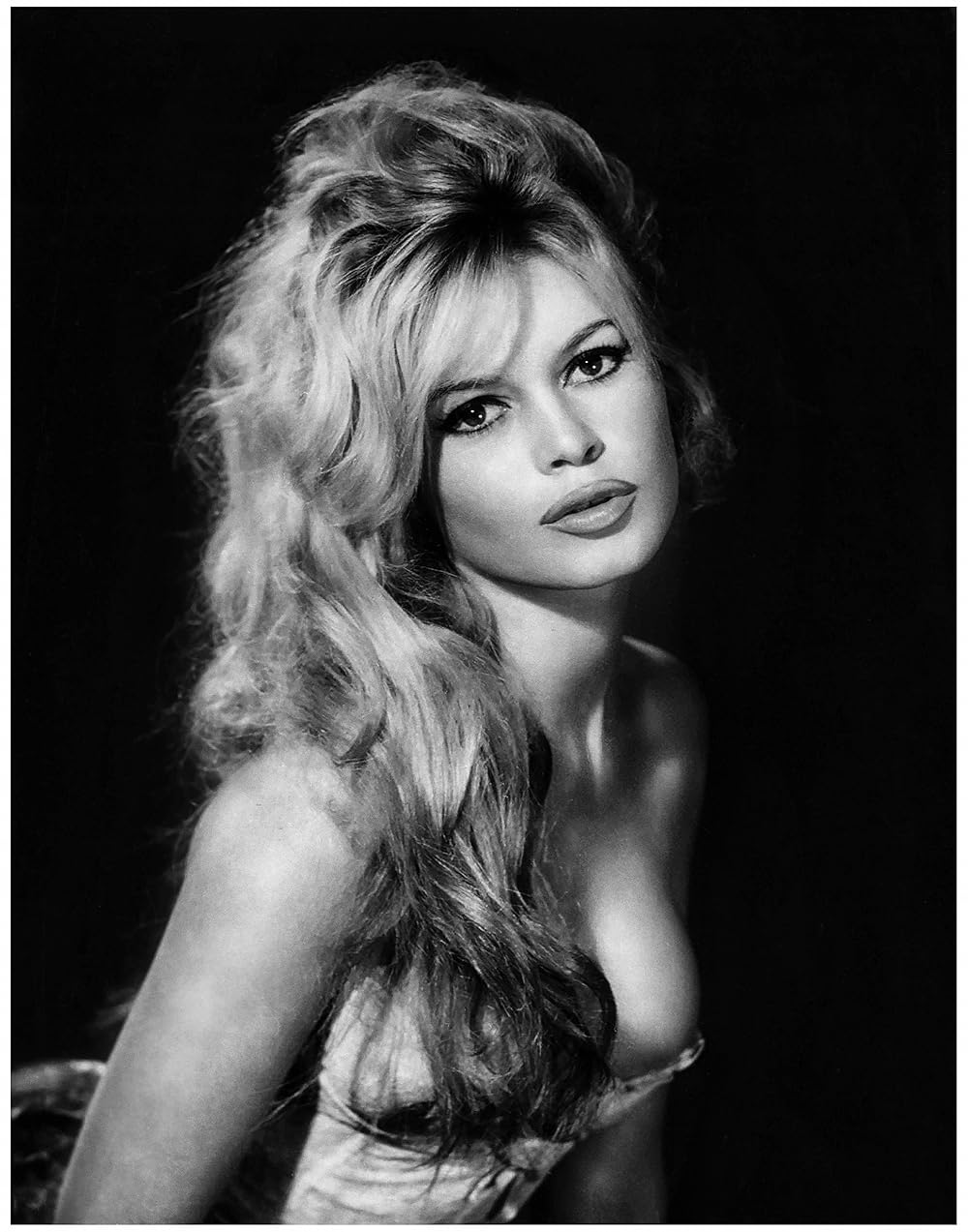
Brigitte Bardot
A tribute to one of the actresses who made me dream.
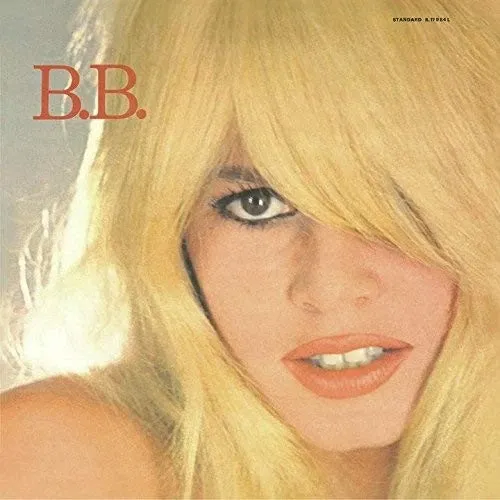
Although Brigitte Bardot, who died this Sunday at the age of 91, acted in almost fifty films, her myth and her image crushed any interpretive challenge. The icon devoured the actress, who retired from cinema in 1973. All in all, here are 10 notable films from his filmography
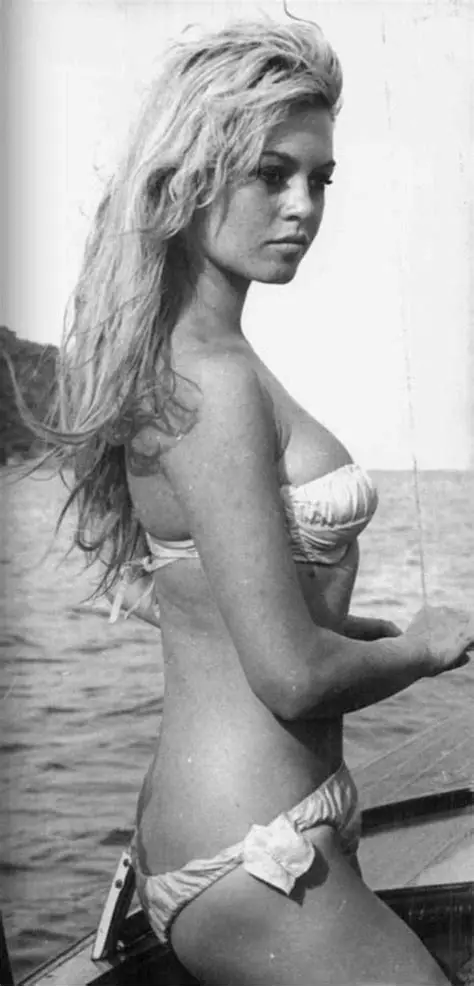
And God Created Woman (1956). Although Bardot already had a dozen films behind her (including Robert Wise's Helen of Troy), this is the film that makes her a star. In the love quartet that is assembled between her character (who is not a femme fatale, beware, but a girl who was simply born exuberant), two brothers and a businessman, director Roger Vadim knew how to put the camera at the service of that face and that body. The rest is already legend.
The Truth (1960). Henri-Georges Clouzot is a filmmaker unjustly forgotten today. Here she squeezes Bardot who gives life to a girl, the black sheep of the family, who after moving to Paris is accused of the murder of her lover. Crime of passion or premeditated? The filming was marked by its intensity and by the death of Vera Clouzot, the filmmaker's wife and co-screenwriter. At the end, still anxious about the ferocity of her character, Bardot tried to commit suicide.
Little B. B. (1956). A girl from the provinces is discovered by a magazine in Paris and thus begins her career as a top model. And she falls in love with her promoter, but he loves her like a daughter, so she looks for a young guy to provoke her jealousy. The title in Spanish expresses the Bardot myth (although her character does not play with her sexual charge), because the original is La mariée est trop belle.
Do you want to dance with me? (1959). Humorous thriller in song: a dentist, who argues with his new and attractive wife Virginie (Bardot), is picked up by a dance teacher, who after this sexless encounter will begin to blackmail him. Bardot, who is radiant and who shot the film pregnant without telling anyone, will fight to clear her husband's good name. And we already have the conflict.
Contempt (1963). The actress received the Godard seal in this film in which she plays the wife of a screenwriter (Michel Picoli) whose marriage disintegrates during the production of a film. Why? Because she spends more and more time with the producer (Jack Palance). The film is best known for having been filmed in the Malaparte house, on the island of Capri, a prodigy of Italian modernist architecture, than for its quality: Godard hated it.
Querida Brigitte (1965). Don't look for Bardot's name in this comedy starring James Stewart. Because the French company strictly forbade it to appear. Bardot plays herself, since she is in love with a child prodigy of mathematics, who because of her talent with numbers drives her father (Stewart), an English teacher who loves poetry, crazy. How did the producers solve the problem of having the French star and not being able to advertise it? Putting your name in the title.
Long live Mary! (1965). Louis Malle (who worked with Bardot three times) and Jean-Claude Carrière wrote a crazy script that, however, hypnotizes: Bardot is the daughter of an Irish terrorist, who in Central America meets another María (Jeanne Moreau), a circus artist, and with her he joins the circus, ending up in the middle of the Mexican Revolution. Not only is there a great musical number by both of them, and a fun look at ideologies, but in the process the two Marías invent the striptease.
Shalako (1968). He could have been a great Western. With Edward Dmytryk directing, and Sean Connery (he is his only western), Bardot, Jack Hawkins, Honor Blackman and Woody Strode in the cast. But the story of a group of European hunters who confront the Indians in New Mexico in 1880 remains a good entertainment, yes, filmed in Almeria.
The Rum Boulevard (1971). Bardot with another great of European cinema, Lino Ventura. In the years of prohibition in the United States, one of the smugglers who cross the Caribbean with shipments of rum falls in love with an actress on a set. Ventura and Bardot couldn't even stand each other in real life.
The Oil Companies (1971). Claudia Cardinale and Brigitte Bardot, a high-voltage duel in European cinema in a film that has become a cult title over time. Two women, at the head of two gangs of outlaws, made up of four sisters and four brothers respectively, fight over the land of a ranch when they discover that there is oil in it. The character of Bardot (Frenchie King) and her sisters robbed banks and trains, until they decide to change their lives and buy a ranch. But Marie (Cardinale) and her four siblings will not give up in their efforts to snatch it away.

The Mouth of Truth is a reader-supported publication. To receive new posts and support my work, consider becoming a free or paid subscriber.
In questo spazio non si paga per entrare: si entra perché si riconosce un’eco,
un frammento di sé, un varco che merita di essere custodito.
Se desideri sostenere questo lavoro con un gesto libero, puoi farlo qui:

This space does not ask for payment to enter: you enter because you recognize an echo,
a fragment of yourself, a threshold worth preserving.
If you wish to support this work with a free and voluntary gesture, you may do so here:
En este espacio no se paga por entrar: se entra porque uno reconoce un eco,
un fragmento de sí mismo, un umbral que merece ser cuidado.
Si deseas apoyar este trabajo con un gesto libre y voluntario, puedes hacerlo aquí: