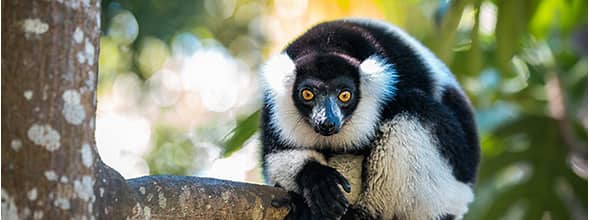
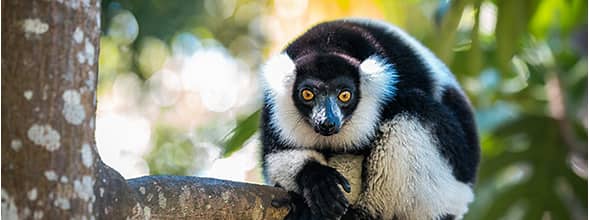
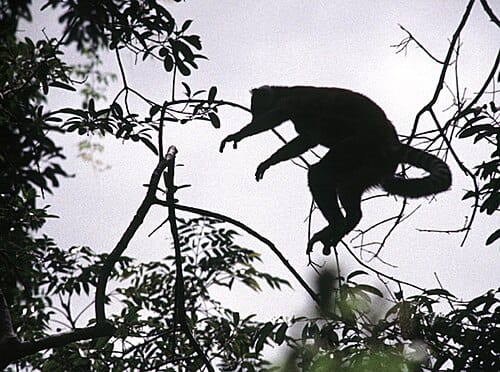
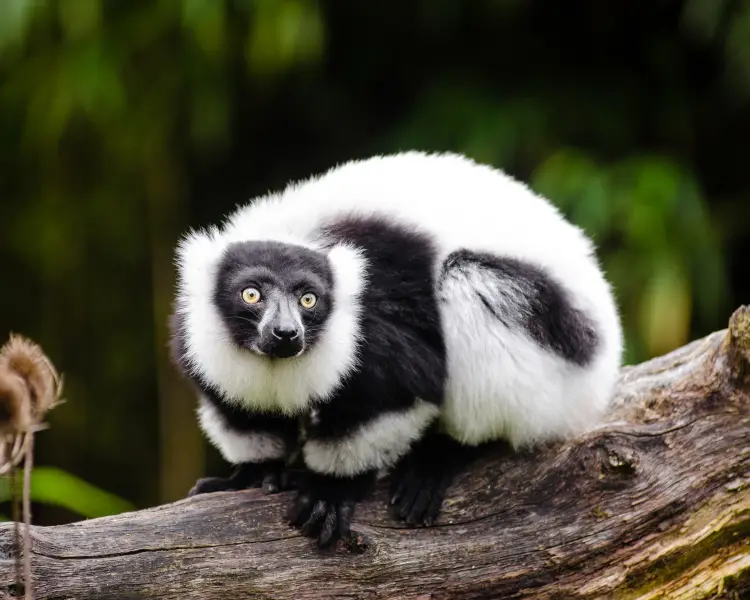
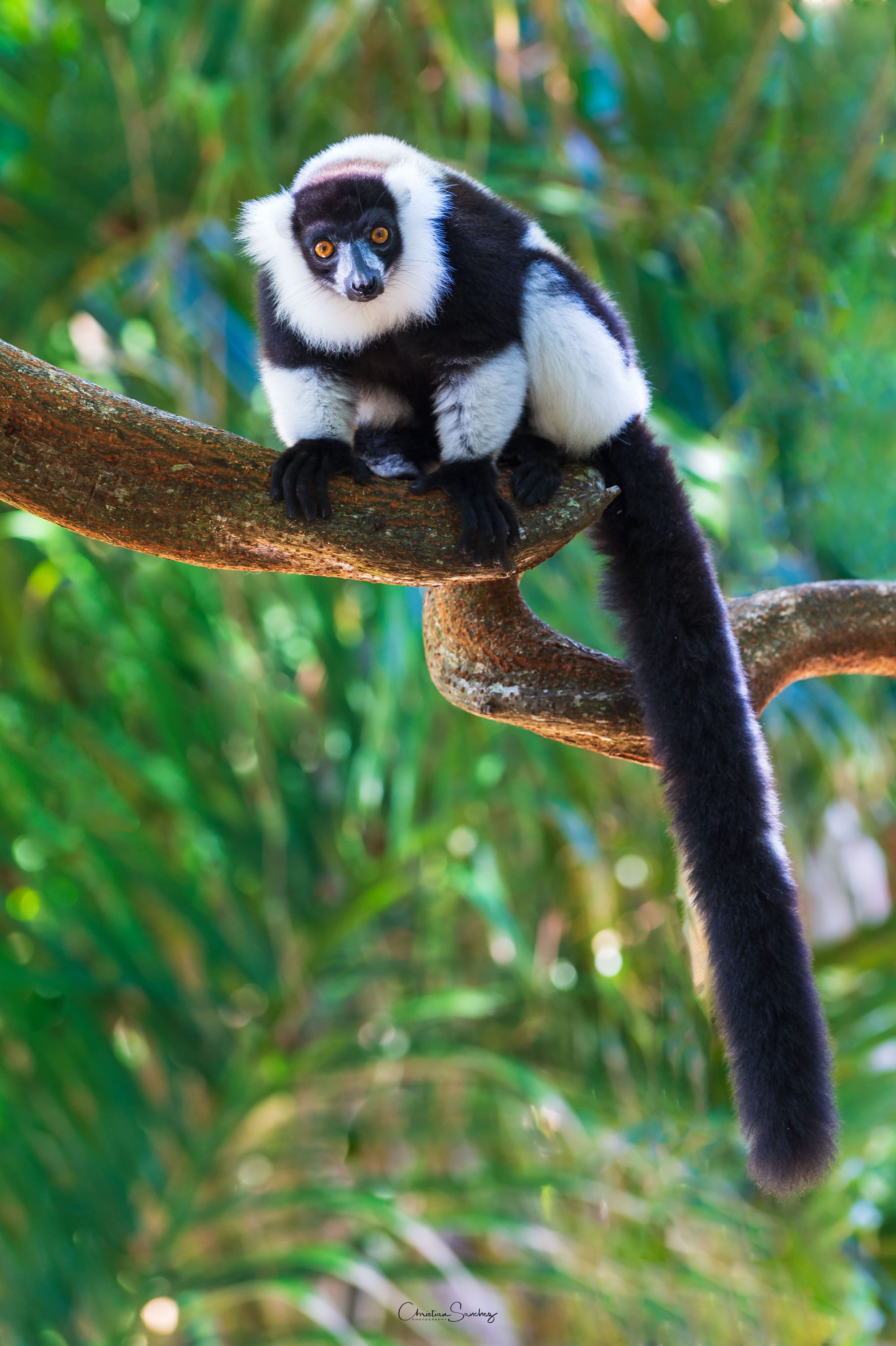
Black and white ruffed lemur in Madagascar
In the heart of the forests of Madagascar lives an extraordinary animal: the black and white ruffed lemur. Their cries, audible from a great distance, accompany vital work for the ecosystem. By feeding on fruits and nectar, it disperses seeds and contributes to the regeneration of the forest. There are even plants that completely depend on it.
You may remember it from the "Madagascar" movies, where lemurs appear as charismatic kings who never stop dancing. However, reality is far from that animated image. The black and white ruffed lemur is listed as a critically endangered species by the IUCN. Logging, fires, forest fragmentation and hunting are reducing their habitat at an alarming rate.
Even so, there are still reasons for hope. Conservation and reforestation projects, together with community initiatives and international cooperation, in which Spain also participates, are opening paths to protect this species. The story of this lemur reminds us that biodiversity depends on shared efforts and constant attention.
Lémur rufo blanco y negro en Madagascar
En el corazón de los bosques de Madagascar vive un animal extraordinario: el lémur rufo blanco y negro. Sus gritos, audibles a gran distancia, acompañan una labor vital para el ecosistema. Al alimentarse de frutos y néctar, dispersa semillas y contribuye a la regeneración del bosque. Hay incluso plantas que dependen por completo de él.
Quizá lo recuerdes por las películas de "Madagascar", donde los lémures aparecen como reyes carismáticos que no dejan de bailar. Sin embargo, la realidad dista mucho de esa imagen animada. El lémur rufo blanco y negro está catalogado como especie en peligro crítico de extinción por la UICN. La tala, los incendios, la fragmentación del bosque y la caza están reduciendo su hábitat a un ritmo alarmante.
Aun así, todavía hay motivos para la esperanza. Los proyectos de conservación y reforestación, junto con las iniciativas comunitarias y la cooperación internacional, en la que también participa España, están abriendo caminos para proteger a esta especie. La historia de este lémur nos recuerda que la biodiversidad depende de esfuerzos compartidos y de una atención constante.

The Mouth of Truth is a reader-supported publication. To receive new posts and support my work, consider becoming a free or paid subscriber.
In questo spazio non si paga per entrare: si entra perché si riconosce un’eco,
un frammento di sé, un varco che merita di essere custodito.
Se desideri sostenere questo lavoro con un gesto libero, puoi farlo qui:

This space does not ask for payment to enter: you enter because you recognize an echo,
a fragment of yourself, a threshold worth preserving.
If you wish to support this work with a free and voluntary gesture, you may do so here:
En este espacio no se paga por entrar: se entra porque uno reconoce un eco,
un fragmento de sí mismo, un umbral que merece ser cuidado.
Si deseas apoyar este trabajo con un gesto libre y voluntario, puedes hacerlo aquí: